As consumers continue to seek wellness experiences that go beyond traditional massage and seek substantive healing, spas are increasingly exploring modalities that address the mind-body connection in new ways. One technique attracting growing interest is Janzu, an aquatic bodywork practice developed in Mexico that combines movement, breath, flotation, meditation, and sensory immersion to create a deeply restorative experience.
Unlike many wellness trends that emerge and disappear within a few seasons, Janzu aligns with several long-term shifts shaping the spa industry. Today's guests are increasingly seeking nervous system regulation, emotional well-being, immersive sensory experiences, and treatments that foster presence rather than performance. For spa professionals looking to diversify their wellness offerings, understanding the principles behind Janzu may provide insight into why aquatic therapies are gaining renewed attention.
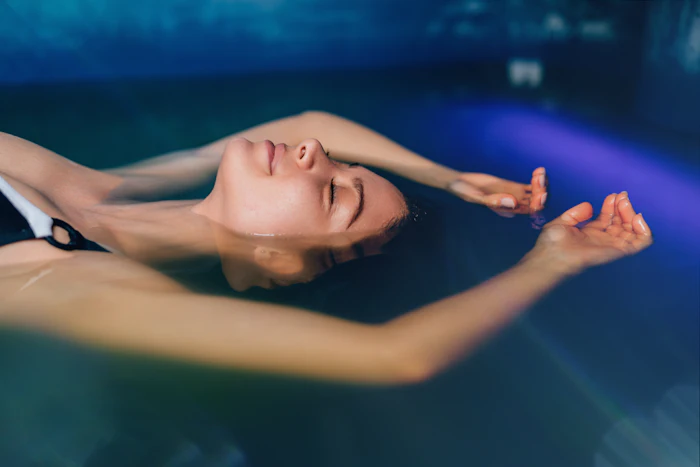
Practitioners often describe Janzu as much more than a massage. It is a fusion of somatic therapies that blends bodywork, meditation, movement, and sensory exploration. Through subtle, graceful movements in warm water, practitioners guide clients through an experience designed to engage the physical, mental, emotional, and energetic aspects of well-being.
According to Lilian Coronado, body therapist and Janzu facilitator, the practice creates a unique opportunity for participants to reconnect with themselves in ways that are difficult to achieve on land.
"Being in the water sharing Janzu has been one of the most beautiful gifts I have ever received," says Lilian. "It has taught me how to listen and how to let go. When I release the need to control the experience, the water itself becomes the guide."
Originally developed in Mexico in 1998, Janzu incorporates flowing movements, breath awareness, and moments of gentle underwater immersion, all while the participant remains fully supported by the practitioner. Lilian describes Janzu as an aquatic experience that blends bodywork, meditation, and sensory exploration. Through graceful movements, practitioners guide the entire being — physical, mental, emotional, and energetic — into a state of deep immersion, helping participants discover a profound sense of inner calm and connection.
Water itself plays a significant role in the experience. Long recognized as a therapeutic medium, water reduces the effects of gravity, relieves pressure on joints, and allows the body to move with minimal muscular effort. Janzu practitioners believe the aquatic environment offers additional benefits because it temporarily alters sensory perception.
"When you are in the water, two very important senses are temporarily suspended: hearing and sight," explains Lilian. "By keeping your eyes closed in the water, you can release your sense of space, and even your sense of your own body."
This temporary reduction of external sensory input creates an experience that differs significantly from traditional bodywork therapies. As participants become immersed in the rhythm of the water, many report a deep sense of calm and presence.
"There comes a moment where your breathing becomes so completely natural that you can simply be present," says Lilian. "Being in the water, receiving and letting go, allows you to meet your own vulnerability."
For wellness professionals, this aspect of sensory immersion is particularly relevant at a time when consumers are increasingly overwhelmed by digital stimulation, information overload, and chronic stress. The ability to disconnect from external distractions and reconnect with one's body is becoming an increasingly valuable wellness outcome.
While formal research on Janzu remains limited, there are now more than 380 Janzu practitioners worldwide, and participants commonly report deep muscle relaxation, increased flexibility, relief from physical discomfort, improved sleep quality, reduced stress, enhanced body awareness, emotional release, and a profound sense of peace and serenity. These outcomes align closely with broader wellness trends focused on recovery, resilience, and restorative self-care.
Lilian believes one of the most important benefits is helping people reconnect with the present moment and everything that accompanies it.
"Being aware of the control we hold in our body and mind is a beautiful step toward surrender, gratitude, and liberation," she says.
One reason aquatic therapies continue to attract attention is their ability to create a safe environment for emotional processing and relaxation. Lilian recalls a particularly memorable session when a client suddenly became tense while floating in the water.
"I paused the movement and she began to cry," says Lilian. "Afterward, she shared that she had finally released grief she had been carrying for years. The breath, the water, the sea, and the presence invited her to let go of something that was emotional, mental, and physical."
While spa professionals should avoid making therapeutic claims outside their scope of practice, experiences such as these help explain why guests increasingly seek wellness modalities that support emotional well-being alongside physical relaxation.
Janzu can be practiced in pools, rivers, lagoons, hot springs, and therapeutic aquatic environments. However, many practitioners believe the ocean creates the most transformative setting. Lilian first learned Janzu in the warm waters of Bacalar, Mexico's famed Lagoon of Seven Colors, but today considers the Sea of Cortez one of her favorite environments for practicing the modality.
"The gentle ocean swell is perfect," says Lilian. "The saltwater beautifully supports and holds the body, and the summer water temperature offers the perfect moment to share Janzu."
The ocean contributes several unique elements that can enhance the experience. Seawater naturally contains magnesium and trace minerals that have long been associated with relaxation and recovery. Saltwater also provides greater buoyancy than fresh water, allowing for deeper stretches, effortless movement, and a sensation of weightlessness that many participants find profoundly calming.
Many wellness experts refer to the calming influence of water as the "Blue Mind" effect, describing the way oceans, lakes, and other bodies of water can help quiet the mind and regulate the nervous system. The rhythm of the waves, combined with the feeling of floating, often creates a meditative state that is difficult to replicate elsewhere. Moving water also generates negative ions, which some studies suggest may contribute to improved mood and overall feelings of well-being.
Across cultures, saltwater has long been associated with cleansing, renewal, and transformation. Whether viewed through a wellness, spiritual, or symbolic lens, many participants describe leaving a Janzu session feeling lighter, refreshed, and emotionally renewed. "In the sea, Janzu becomes more than a therapy," says Lilian. "It's a return to the source."
As consumers continue seeking immersive wellness experiences, Janzu offers spas and wellness resorts an opportunity to differentiate themselves through highly personalized programming. It reflects a larger shift within the wellness industry away from simply treating symptoms and toward creating experiences that support the whole person.
As wellness continues to evolve beyond beauty and fitness alone, therapies that encourage presence, sensory restoration, and nervous system regulation are likely to become increasingly valuable additions to spa menus. When asked what she hopes people carry with them long after they leave the water, Lilian's answer captures the essence of Janzu.
"Presence," says Lilian. "What we allow ourselves to experience in the water is exactly what we can live day by day through true presence. Listening, letting go, and living in gratitude."
For spas seeking innovative ways to help guests slow down, reconnect, and experience deeper restoration, Janzu may represent one of the most compelling aquatic wellness modalities emerging today. As Lilian often tells her clients, "Be like water: transform, let go, and allow the movement to cleanse and nourish your soul.”