When clients hear the term “chemical peel,” many still have a flash of fear come across their face. The negative connotations from outdated, severely strong, aggressive (and usually medically applied only) peels, or severely dramatized scenes in movies and TV shows still exist for a lot of people. They immediately think they will be in pain, their skin will become inflamed, red, irritated, scabbing over and that their skin will be hanging from their faces for all to see for an undetermined amount of time. Entering the fall season, chemical peel treatments and appointments go on the rise due to the lower temperatures and less sun exposure clients will have, which gives chemical peels a chance to shine. This is especially true for people looking for hyperpigmentation treatments.
During peel season, estheticians have the opportunity to discuss chemical peel treatments with their clients in a realistic and educational way. Listening to their concerns and fears, and updating their knowledge on those first is key. The first thing estheticians should do when having this conversation for the first time with their clients is to reassure them that technology, science and formulations have come a long way from what they used to be. This is where you get to watch that flash of fear go away. Setting expectations is second. Talking about goals, the number of appointments it will take and how often they will have to come in, as well as the necessary post treatment care, will help set realistic parameters and then the treatment plan can start.
The “slow and steady” approach means you’re going to work slowly, carefully and gradually with your client, starting the least aggressive as possible, and then increasing the strength of the peels and active ingredient products at each service. This method is often under-utilized due to the urge to deliver results as fast as possible. Of course everyone wants results as fast as possible, especially in the fast paced, instant gratification world that we live in today. However, when it comes to hyperpigmentation, fast results do not equal long term results. Sun damage can take years to come to the surface of the skin before clients even know they have it. We find this most often in the generation that laid outside for hours covered in baby oil and have been starting to look into where all these dark spots “suddenly” came from. When an issue can take that long to be seen on the surface, it makes sense that it should take time to treat it. Instead of doing a couple of really strong chemical peel appointments once a week for a month or two, try one full peel appointment every four to six weeks for an extended period of time. For example, starting at the beginning of peel season in theory puts the first service performed in October, and the last service is performed in March or April, depending if you’re doing every four weeks, five weeks, or six weeks.
Treating hyperpigmentation with chemical peels using a slow and steady approach works well for multiple reasons. First, people who have been dealing with hyperpigmentation have often been dealing with it for a long time, trying anything and everything they can to get rid of it, only for it to come back within a few months, or for more dark spots to appear in a new area. When peels are applied too close together, or are particularly strong in hopes of more instant results, the skin doesn’t have time to fully heal before the next peel is applied. This is also when postinflammatory hyperpigmentation (PIH) can occur and then clients become incredibly discouraged. Second, every client’s skin is different. Spacing out your appointments gives you (as the provider) time to check in with your client and see how their skin reacts to the products you use and the treatment performed. If someone ends up being a little more sensitive than originally thought, that’s something that should be figured out sooner rather than later. Third, your client won’t feel rushed. Chances are they’re either exhausted from trying anything they can or they’re brand new to seeing an esthetician and they want to know they are heard, cared for and working with a professional who wants to see results just as much as they do, but to still customize their treatment plan, and work with them as the individual they are.
Now imagine implementing a slower, steadier, more spaced out approach. Depending on if you’re using self-neutralizing or non-self neutralizing chemical peels obviously determines how your protocol needs to be for each appointment, but the method remains the same. Make sure those expectations are set, and make sure your client's skin is prepped and ready for chemical peel treatments. Once you have done that, you will start the first chemical peel treatment. Choose a light peel, apply a minimal amount of applications, and follow with complimentary products, a good moisturizer for their skin, and of course SPF. In theory, your client will experience minimal flaking, allowing for little to no down time from their day-to-day life. Schedule the next appointment four to six weeks out. At the second appointment you go a little stronger on the chemical peel. That could mean doing the same peel you did last time but with more applications/layers or using a slightly stronger peel than the first one, or depending on the type of peels and your states regulations, doing a small combination of two different chemical peels. You slowly build them up and develop the client's tolerance.
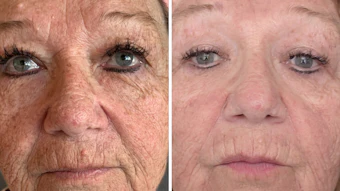
An example would be a series of six peels done once a month for six months. Obviously results will vary depending on a number of things including the type of hyperpigmentation, the home care routine, the skin tolerance level, the type of peels being used, etc. but there are still results. Taking photos at each appointment will show this, allowing you as the professional to determine an estimated amount of series needed. An additional option would be once you’ve completed six treatments in six months, let their skin relax for three months. Many clients with mature, or sun damaged skin have a slower natural cellular turnover rate and it can take a while for their skin to return to its normal pH level, and to heal from the six months of increased cellular turnover on a deeper level. During those three months, pause the chemical peels and focus on hydration, barrier protection, and relaxation while your client continues their homecare routine to stay consistent. After the 90-day break period is over, start the peel process again once per month for six months, but a little stronger than the first one of the first series. Remember that every client is different, so a series could be a different amount of treatments than six and a three month break may or may not be necessary. A lot of teamwork is necessary to curate and stay consistent with the correct home care regimen for each and every client differently. It is also important to know and admit if or when something is possibly beyond your knowledge or scope, or if your client should be referred to a dermatologist.
This six months on, three months off approach means you will be working with your client on their hyperpigmentation for most likely a minimum of 15 months, which will likely surprise your client during that conversation of setting expectations. That timeline is just a general guideline though. You as the professional know your product lines, how your peels work, and know your clients’ skin, so take the slow and steady approach and make it your own. There are so many variables that affect what would be best for each client and each esthetician like the cause of the hyperpigmentation, the skin type, home care, skin of color and different ethnicities, the peel(s) being used, and the client’s history with PIH if any. However, using this approach gives a much higher likelihood of avoiding PIH, continuing to have little downtime for your client between appointments, and most importantly, longer lasting results. You’ll be able to show your client what their skin looked like at the beginning of their treatments with you, to what it has become now by using those photos that were taken at every appointment to show the pigmentation fading more and more which will allow them to really see that not only has this slow and steady approach been working to rid them of their current hyperpigmentation, but that that no new spots have appeared, making it both a corrective and preventative service for them.
In an ever-evolving and competitive industry, building trust, having the updated education and consistent results to back you up, and proving which methods work and which don’t is imperative to any esthetician's success and client happiness. A happy client means client retention, and client referrals. Clients will continue to see you after their pigmentation has been addressed with other services in order to prevent future pigment from forming as well as to purchase their homecare from you because they now know they are not just another number to you. When the provider communicates, the services prove their worth, and the long-term results speak for themselves, clients will appreciate the entirety of their journey with you.