Navigating the latest in AI in an industry where the human element is intrinsic leaves us to decide where exactly we should be drawing the line on what can and can't be automated.
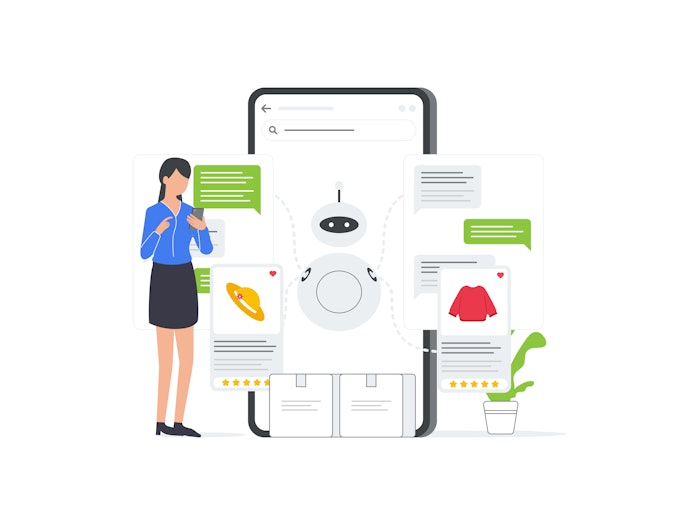
In this arena, conversational commerce can be a tricky subject. If conversation and connection are to be leveraged to help businesses grow, then delegating that task to AI may initially sound counter-intuitive.
However, if we're to acknowledge that there's a distinctly human element being lost in this fast-paced age, then we need to acknowledge that there's nuance to interactions, and that not all needs, even those with respect to good customer service, hold equal weight.
For example, the recurring customer looking to refill on products can be more easily attended to than the client who's just beginning their skin care journey with you.
For quick encounters with simple answers and a set precedent of behavior, AI can be a great tool to delegate to. For one thing, it's always "on-the-clock" so you don't need to worry about missing any inquiries from night owls when your handy AI-employee can handle bookings and simple client questions in a way that feels more like talking to Scar-Jo in Her, and less like trying to book through the Terminator.
No More Missing Out
Medspa software company, Prospyr, says that AI can reduce missed calls by 40%, allowing staff to remain free for in-person care. The brand goes on to say that it can reduce no-shows by 15% with personalized, automated text appointment reminders and follow-ups, saving your team time while maintaining consistency in client relationships.
AI virtual assistants can also take simple admin tasks in hand, managing bookings, offering multilingual support and offering generalized client education, which could cut reception costs by 70%.
This means that questions from late-night shoppers can be answered at any time of day, catching potentially dropped sales for those who abandon their online carts if they don't immediately get a response, and the same goes for appointments, meaning more clients coming in to peruse your shelves themselves.
Where AI Shines and Integrating Other Tech
AI is good for storing and analyzing data quickly, something that people can do, albeit with a larger margin for error and with great tedium (and also, at the cost of the time you could have otherwise spent in the treatment room.)
For those who want to train AI programs to work for them, you can take the time to train them well enough to conduct superficial consultations for simple problems or generalized skin care advice, or even to help clients decide if they need to come in for something more personalized. Augmented reality (AR) try-ons can be handy for testing out makeup, lash/brow looks or the results of aesthetic procedures.
Wearables can track stress, while apps allow clients to log feelings and symptoms so that when they do go and see you again, you'll have a wider breadth of information to work off of when making recommendations. AI can be handy for analyzing these different kinds of data quickly and over time, so that you have the complete picture of what your client's lifestyle looks like, allowing you to more strategically plan for closing the gap between them and their goals.
A more comprehensive dossier on a client's skin care journey means more personalized product recommendations that clients trust, making it easier to close sales initially and sustain a steady stream of refills in the future.
Post-Appointment Sentiments and Social Media
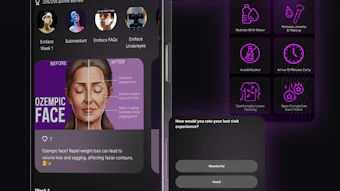
You can also use AI when sending post-appointment questionnaires to compile sentiments and feedback, and get a general litmus test of how your business is being received. Many social media management tools allow a similar function, empowering account owners to gauge the broader industry conversation and how their business is meshing with it.
Word clouds, moods and numerical metrics can all be highly valuable in "reading the room". Social media platforms like Instagram and Facebook are also leveraging AI for more targeted promotions and real-time suggestions based on user behavior, meaning that if you leverage AI to build a more precise brand, you can be sure you'll be showing up in spaces that seem tailor-made for your audience.