Heightened consumer awareness of the skin barrier and the growing wellness culture has brought the skin barrier from the treatment room, out to the center stage of the larger skin care conversation.
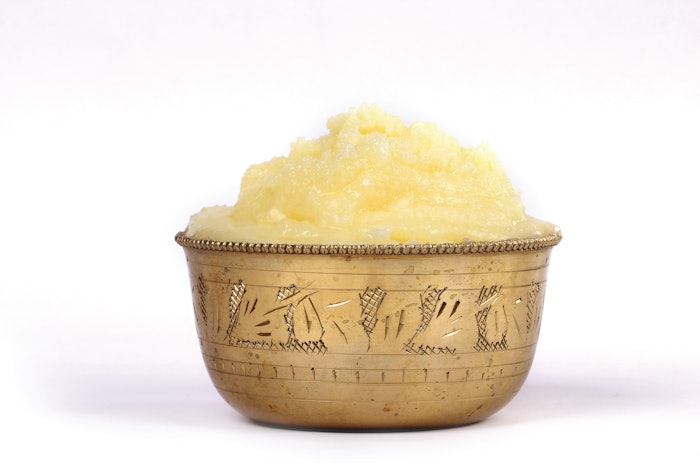
While tech innovations have given way to a myriad of ingredients that soothe, hydrate and fortify, there's one time-tested ingredient we need not reinvent the wheel in order to reap the benefits of: ghee.
This article is only available to registered users.
Log In to View the Full Article
Heightened consumer awareness of the skin barrier and the growing wellness culture has brought the skin barrier from the treatment room, out to the center stage of the larger skin care conversation.
While tech innovations have given way to a myriad of ingredients that soothe, hydrate and fortify, there's one time-tested ingredient we need not reinvent the wheel in order to reap the benefits of: ghee.
"Ghee has been treasured in ayurvedic medicine for nourishment and also as a remedy for skin concerns for thousands of years," says Terri Wojak, LE, educator and founder of Aesthetics Exposed. "Ghee is clarified butter from cow's milk; it is rich in fatty acids, which mimic the skin's natural lipids to enhance moisture and hydration. It also has anti-inflammatory properties to soothe irritation and contains antimicrobial peptides that aid in healing the skin."
Ingredients as Building Blocks for Client Education
As clients become increasingly cognizant of what they put in their bodies and on their skin, brands have been making attempts to distinguish their products by emphasizing popularly known "super" ingredients, to assert their credibility through a wellness angle.
Moisturization and longevity are both demands in the industry that aren't going anywhere, and with ghee specifically, several components make it particularly alluring to the average consumer. Ghee's vitamins A and E make it appealing to those looking to elevate their well-aging strategy, while the anti-inflammatory effects of ghee's butyric acid make it popular for anyone struggling with an inflammatory condition. Since inflammation is tied to virtually every issue, though, discretion is advised.
"In my opinion, ghee works best for dry skin with a compromised barrier; it can also be good for eczema and psoriasis if the client has no sensitivities to dairy proteins," advises Wojak. "I would not use it on those prone to acne since it can be comedogenic. Only use pure, organic, grass-fed ghee from a reputable source to avoid additives that can irritate the skin. Ghee may not be good for everyone, but it is an excellent ingredient when used properly on the right skin!"
Heavy is the Skin?
While ghee has its share of benefits, you'll notice that it's not sweeping the mainstream the way salicylic acid, squalene or bakuchiol are.
As ghee can be comedogenic, many associate it with being greasy or heavy, which not only spurs pore-clogging worries, but isn't a sensation that pulls crowds to their nearest supermarket shelves.
We live in a time where formulation innovation is flourishing and with time to market shorter than it's ever been, and a whole host of light-weight formulas to choose from, ghee isn't a standout, even with its benefits.
So, what's the verdict? The same that it is for every ingredient; there's no miracle cure for perfect skin. Everyone's different, and everything, from skin type, to lifestyle should be taken into account when clients curate for their regimen.