The industry is in a whirlwind right now.
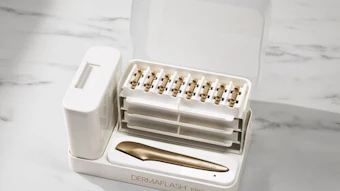
It seems like every day, a new device debuts, promising the erasure of visible signs of aging, near-science fiction anti-gravity innovations when it comes to sagging and sculpted features like we’re fine clay between a potter’s fingers.
This article is only available to registered users.
Log In to View the Full Article
The industry is in a whirlwind right now.
It seems like every day, a new device debuts, promising the erasure of visible signs of aging, near-science fiction anti-gravity innovations when it comes to sagging and sculpted features like we’re fine clay between a potter’s fingers.
This also means that in terms of aesthetics, we’re at a unique cross-section. You have a market flooded with products, devices and solutions, and a consumer base that’s more aware of aesthetic practices than ever before. Surely, this means that beauty is becoming more attainable, more accessible, than ever before, with a route to desirable results for every price point, skin type and style?
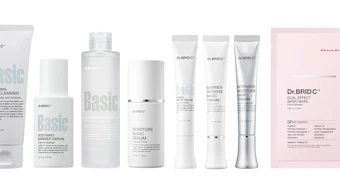
Maybe to some extent; we’re certainly witnessing a sort of second-wave globalization when it comes to beauty, after all. Aesthetics is more inclusive than it used to be; there are skin care brands for every budget, and the same goes for services. Weight loss drugs like GLP-1s aren’t reserved for just the wealthiest of us either. Skin and body types traditionally locked out by the foundation of Western beauty standards have been allowed to let their individualistic communities flourish, cracking open what were once seen as opaque, niche monoliths to glean new facets of multicultural beauty to the mainstream.
However.
Beauty has always been leveraged as a status symbol, and in a dizzying cycle, we tumble. Things coveted by the upper echelons of society emerge as what’s au courant, leaving the rest of us to eke out a path to replicable results. As a trend becomes super mainstream and falls into younger, less discerning hands, tastemakers look for the bottle where lightning will strike next.
 “It's important to remember that skin care and wellness are about both daily habits and specialty services,” says Stephanie Weeden, an esthetician of 15 years at Tricoci Oak Brook.thor at Adobe Stock
Where does luxury beauty leave wellness?
The merging of beauty and wellness complicates this dynamic further, as it’s troubling to think of beauty (and the esteem that society attaches to it) as being paywalled, but putting a price on wellness and longevity—well, that’s a rather more concerning sentiment.
So, if beauty, skin and wellness are merging and expanding horizontally with more of, well, everything, what differentiates luxe wellness from its more attainable cousin?
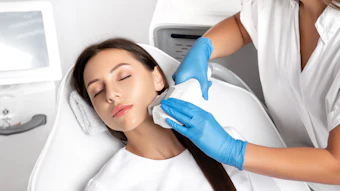
“For seasoned estheticians, the industry’s growing emphasis on devices reflects both technological advancement and rising client expectations driven by a more informed wellness culture,” says Kristyn Smith, esthetician and founder of Practise NYC. “Today’s luxury client is increasingly aware of tools and modalities, but is seeking thoughtful integration—wanting technology to support long-term skin health rather than replace hands-on expertise. This heightened awareness has refined demand overall, with clients expecting personalization, discretion and a clear understanding of how wellness, lifestyle and skin intersect. When treating specific conditions such as hormonal acne in a luxury setting, the approach often differs from other environments by prioritizing education, consistency and restraint over aggressive intervention, ensuring the experience feels corrective, intentional and deeply considered.”
Brand T. Beal, MD, Fellow of the American Academy of Dermatology, adds that trust plays a factor as well. He says, “Luxury starts when the visit feels like ‘this was built for me,’ not ‘pick Botox A or B.’ Rather, a thoughtful roadmap: skin goals, timeline, maintenance and realistic expectations.”
This makes sense; if one of the most valuable things we can purchase is convenience, then luxury in aesthetics means taking the heavy lifting out of clients’ hands without sacrificing customization. Curated to be results-oriented, those in the luxury wellness market have the advantage of being able to afford not only the latest treatments and specialized treatments, but more treatments in general, meaning more consistency. With more frequent visits to their esthetician, that means restraint comes at what feels like less of a cost. It doesn’t feel like missing out, but letting the skin rest when you know your next consultation is just around the corner.
It’s this level of precision that Beal says is characteristic of luxury services. “Same concerns don’t equal the same protocol,” he notes. “Luxury care means tailoring products, procedures and pacing to the patient’s anatomy, lifestyle, tolerance, budget and risk profile.”
Beal adds: “[Luxury means] A calm, unrushed experience. Luxury is time to ask questions, understand options and leave feeling confident, not pressured.” The final tell for someone being in the luxury market? Results that age well. According to Beal, the most premium outcome is the one that looks amazing now and continues to look amazing five years from now.
 Skin as a modern status symbol means glow, texture and healthy skin architecture—not obvious work.Artranq at Adobe Stock
Is filler the next “heroin” chic?
Not quite. While beauty standards, especially in the luxury space, will always be somewhat defined by their air of unattainability, culturally, we’re all ready to put down dangerous trends. When longevity is the holy grail in both aesthetics and wellness, there simply isn’t any more room to choose ultra-thinness over a healthy, fit glow, or dried-out, overly processed skin and hair, compared to working with your body’s natural chemistry.
Instead, “class” will be defined by how effortless beauty looks. Regenerative medicine is huge because it works with the body’s natural chemistry to not hide the visual signs of aging, but to slow and even reverse them. Filler only blew up in the mainstream once the industry figured out how to better create seamless, natural-looking results.
According to Beal, skin as a modern status symbol means glow, texture and healthy skin architecture—not obvious work.
He goes on to elaborate on the division we see even within the medspa space, which those less discerning or experienced may not know how to differentiate: “The market has split into two lanes. Convenience and discount-driven experiences on one end, and premium outcomes and premium services on the other. Many patients 'graduate’ to luxury after too many rushed or cookie-cutter treatments that are not getting them the results they are looking for. When consumers have 10 places offering ‘the same’ injectable, they start asking either: One, who is the cheapest, or two, who’s the most skilled? Who’s safest? Who will make me look like me? Who can deliver the outcome I am looking for? Medspas that are competing on price need volume. Doctors who are competing on quality do not have to sell more filler; they can focus on the natural outcome the patient desires.”
 Dana Racana, an esthetician of 29 years at Tricoci Deerfield, says, “Staying sharp in today's market requires a mindset of integrative esthetics. Rather than viewing medspas as competition, I view them as a partner in a client's long-term skin health."elena volf at Adobe Stock
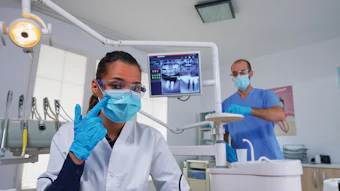
When care can and is being personalized across different goals and different comfort levels in terms of invasiveness and modalities, medspas aren’t replacing much of anything, but filling out an already sprawling landscape. Stephanie Weeden, an esthetician of 15 years at Tricoci Oak Brook, says, “Medspas have elevated the skin care industry, especially for clients needing corrective treatments like resurfacing. If you think about it as a full ecosystem, my experience is in treating, maintaining and supporting the skin before and after medspa treatments. When a client needs more than I can safely offer, I actually see that as a good thing, because moving from a spa service to a medspa treatment can lead to better outcomes and healthier skin long-term.”
Most industry professionals are in agreement that this new age of diversified procedures and treatments requires everyone to respect the limits of who can do what, which can serve as the foundation for stronger, more meaningful professional connections rather than divvy up an industry at times polarized by different flavors of approaches. “Safety is the ultimate flex,” states Beal. “High-end care is conservative where it should be: right candidates, right doses, right intervals, meticulous technique and a strong emphasis on natural results over trends.
Dana Racana, an esthetician of 29 years at Tricoci Deerfield, adds: “Staying sharp in today's market requires a mindset of integrative esthetics. Rather than viewing medspas as competition, I view them as a partner in a client's long-term skin health. At Tricoci, we've leaned into this concept by recently launching our pilot medspa at our Oakbrook location, which is allowing us to bridge the gap between clinical results and the high-end spa experience we are known for. As an educator, I stay relevant by prioritizing continuing education within our team of over one hundred estheticians. The exciting growth of our medspa within our department now lets me analyze and teach the importance of medical-grade treatments and how we can support them by focusing on pre-and post-treatments by our licensed estheticians.”
“It's important to remember that skin care and wellness are about both daily habits and specialty services,” Weeden continues. “I encourage my clients to think above and beyond products and devices and focus on their overall health from the inside out. For example, what are they eating? Are they stressed all the time? Are they living in a positive environment? Providing that perspective and guidance is crucial.”
While many of us tend to think of medical spaces as more utilitarian than luxurious (if not a little anxiety-inducing), medspas are forging a new identity that allows the two spaces to overlap. The role of those with medical expertise in aesthetic spaces can define their brand of luxury by something he calls “white glove follow-through.” “Great pre-care instructions, thoughtful post-care check-ins and easy access when patients have questions or issues," Beal lists. “Luxury is ‘we’ve got you’ from start to finish.”
Racana emphasizes the importance of staff education, not just around the different modalities, but on the various roles of professionals in the industry. She says, “In a 'gadget-heavy-industry', it's easy to get hung up on the ‘bells and whistles.’ I teach our new hires that technology is a tool, not a replacement for personal touch. Our hands really are the best tool in our business! While it's imperative that we understand the physics behind devices like LED, microcurrent and ultrasonic (to name a few), we must navigate through this by never losing our power of human connection. Our roles as estheticians have quickly evolved from ‘service providers’ to ‘skin health coaches.’ We educate our clients on how lifestyle impacts their skin, how home regimens matter, and we are the bridge between their clinical fixes and a sustainable, holistic skin care plan.”
Understanding the nuances between various roles in clients’ broader wellness journey is precisely why Weeden and Racana feel confident in curating services and treatments where they work. For Weeden, Tricoci’s wide array of options gives her the flexibility to work freely in pursuit of what best suits each client: “Because there are so many skin care [solutions] available under the Tricoci umbrella—both in the spa and medspa spaces—I can guide my clients toward custom, smart skin care investments that fit their needs and budgets.”
Racana aligns with this approach as well, connecting it back to the values so foundational to Tricoci as a brand. She says, “Curation at Tricoci is a balance of integrity and innovation. We don't chase every 'viral' treatment; instead, we curate based on the pillars of efficacy, safety and the Tricoci Experience. When we launched the Tricoci Aesthetics MedSpa in Oakbrook, we looked for services that complemented our existing spa rituals rather than replacing them. We select treatments that offer synergistic results, for example, pairing a medical microneedling with a restorative, calming LED facial. We also rely heavily on data and feedback from our providers. Because I work with our new hire program, I'm able to see which techniques deliver consistent results across different skin types, ensuring our menu is inclusive, effective and sophisticated.”
“Luxury skin care is where medicine meets hospitality,” Beal concludes. “High standards, thoughtful communication, meticulous technique and a patient experience that feels calm, personalized and genuinely cared for.”
I don’t know about you, but that sounds like a worthwhile investment for any well-seeker.