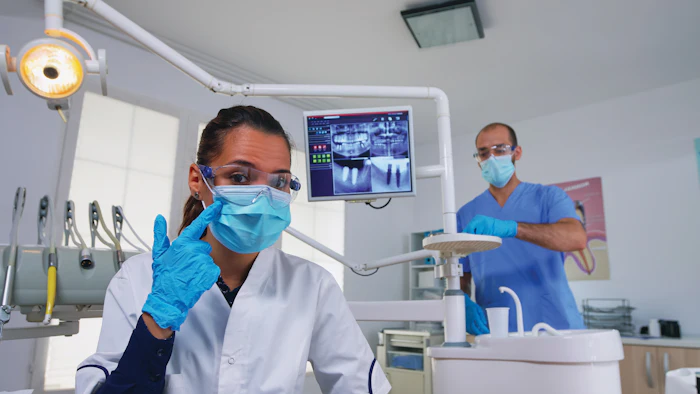
Maybe you wouldn't think to refresh your Botox or filler at your dental office with your dental hygienist or dentist — yet, but did you know that they are the "face specialists?" Injections at the dental office are becoming more common, and the emerging ability to take advantage of their expertise is revolutionary.
Both dentists and dental hygienists can administer local anesthesia in the oral cavity in at least 45 states. To do so, extensive training in school, along with a board exam to obtain licensure, must take place first. They learn a series of injections, ranging from superficial gum infiltrations to more complex nerve blocks in the mucosa, making dental hygienists highly skilled in injection technique and safety protocols. Currently, dentists may perform therapeutic Botox for TMJ issues and bruxism and/or cosmetic Botox in at least 27 states1 and growing, while only a few states allow licensed dental hygienists to legally administer Botox under the direct supervision of a dentist (meaning a licensed dentist must be present in the office, not overshadowing the procedure). These states are Kansas, Oklahoma and Arizona, with Kansas kicking it off in 2022. In Arizona, once a hygienist obtains certification beyond their basic licensure and administers 75 injections, they can administer under general supervision (autonomously, without a dentist on site). Since then, Utah has gained legislative approval with training protocols pending, and Massachusetts has a bill moving through the legislative process that would allow hygienists to join dentists if passed. More than a dozen other states are currently following suit, meaning the prevalence of this option will be a long-overdue norm in the near future.
Why would a dental professional administer Botox?
Dentists and hygienists are well-positioned to perform facial injections, undergoing extensive training in head and neck musculature, head anatomy and oral injection techniques. In fact, they use thicker and longer needles than those used for facial Botox in precise, technical and complex oral injections to administer local anesthesia in the oral cavity regularly. For example, the inferior alveolar injection is a commonly used nerve block in dentistry and requires inserting a 27-gauge long needle up to 25mm deep into the oral tissue. A Botox injection uses a 30–34-gauge short needle with an average depth of 8mm in easily visible and accessible sites.
 Denistry Needle versus Botox InjectionSarah Crow RDH, in Massachusetts
Dental hygienists also have a trained eye for facial esthetics, examining the extra-oral anatomy in every dental visit, and understanding golden proportions and ideal harmony. Along with dentists, dental hygienists have superior training in head and neck anatomy compared to other clinical professionals, since they work specifically on the neck and up. The reason Botox is not as prevalent among dental hygienists as it is among dentists is partially that hygienists battle autonomy issues that nurses are not faced with in their relationships with physicians and also because the scope of practice for both dental professionals is governed by state boards that may deny them without adequate insight. The ability to inject is not automatically granted to any medical professional with a license. State boards require all clinicians, both medical and dental, to have specialized certification in addition to their license to perform injections.
Not every dental hygienist or dental office will offer injections at your visits, as the scope of practice expands, just like not every nurse or medical facility does. Only the professionals who have a passion for facial esthetics and invest in certification through the American Academy of Facial Esthetics (AAFE) will, as the other qualified providers do. The AAFE makes an excellent case for allowing dental professionals to administer injections, asking why general practitioners such as OB/GYNs and ophthalmologists, and even general plastic surgeons, who have no extensive training of the head and neck, can do so while the dental field remains blocked2.
What could an injection at the dental office do for me?
Facial injections, including fillers, can be implemented in cosmetic dentistry to correct facial harmony, lip incompetencies and to support dental esthetic outcomes (ie, reduce the appearance of a "gummy" smile). Additionally, Botox implementation can be used as a treatment to correct TMJ pain and manage parafunctional habits such as bruxism. This therapeutic function can reduce pain, soften an angular jawline and reduce wear and bone loss of the teeth. If you have a dental issue like TMJ, why wouldn't you want a dental professional who has adequate training and understanding of the surrounding anatomy and physiology to treat you?
 "appearance of a 'gummy' smile"Adobe Stock/peopleimages.com
Interestingly, Botox injections may be covered by insurance if used for therapeutic purposes to treat pain and muscle dysfunction, similar to when it's used by neurologists to treat migraine headaches. It is very unlikely to be covered when used for esthetic purposes, but that is the case with any clinician. The benefit is that with dental professionals, particularly cosmetic dentists and hygienists with a background in periodontics (where they are more likely to administer injections more frequently in their daily practice), you'll be with a clinical expert in facial anatomy and injection technique.
 Saarah Crow RDH, in Massachusetts
Still raising an eyebrow?
If you're still having trouble connecting the dots between the dental office and facial esthetics, consider these similar instances in the beauty realm where the provider doesn’t quite match the product. Why are some of the most coveted beauty brands created by fashion designers or celebrities, rather than the experts, estheticians and makeup artists, who know skin care and makeup best? Why do nail salons offer teeth whitening services when they have no dental background? This curiosity captures how some dental hygienists feel about their limitations in offering injections, knowing that they are more than qualified and should be at the forefront of offering this treatment, above other clinicians.
This insider knowledge about the relationship between dental and injections will be practical as access is gained by dental professionals, including licensed dental hygienists. Let the buzz be your first-to-know advantage.