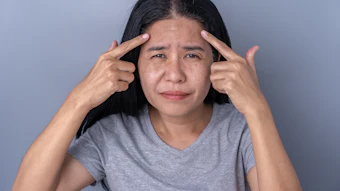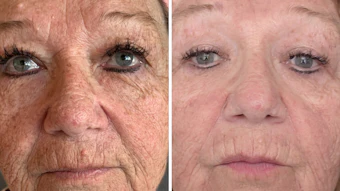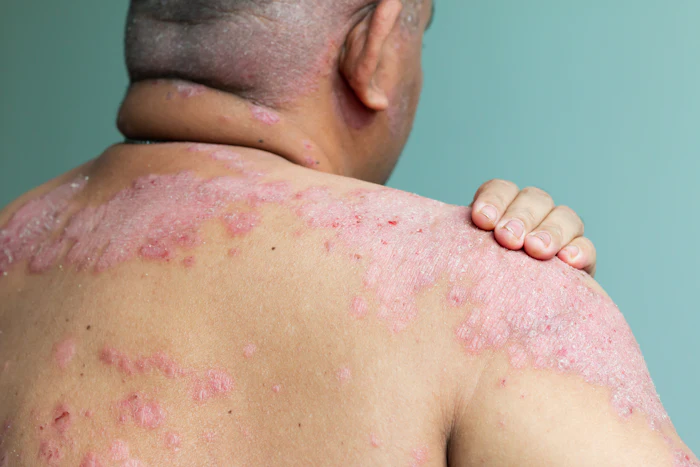
Compromised skin is often approached as a category, but in clinical practice, it is better understood as a condition of function.
It can present as atopic dermatitis, eczema, rosacea, post-procedure sensitivity, oncology-impacted skin, or chronic barrier disruption. While these conditions vary in appearance, they share a common underlying reality: impaired barrier function, persistent inflammation, and a reduced ability for the skin to repair itself efficiently.
In my treatment room, I see this most clearly in my male clientele.
Men frequently present with compromised skin that goes unrecognized—pseudofolliculitis barbae, chronic ingrown hairs, post-inflammatory hyperpigmentation, dehydration masked by excess oil and barrier damage from repeated shaving or over-cleansing. These are often treated as isolated concerns, when in reality they reflect a deeper imbalance in the skin’s overall function.
The traditional response has been to intensify treatment—stronger exfoliation, more aggressive correction, faster results. But compromised skin does not respond well to urgency. It responds to capacity.
From Correction to Capacity
Before initiating any corrective treatment, I assess what I refer to as the skin’s dermal reserve—its ability to tolerate stimulation, regenerate at a cellular level, and maintain stability after intervention.
Barrier dysfunction is not solely a topical issue. It often reflects broader systemic influences, including immune response, inflammation, and overall health. Conditions such as eczema and atopic dermatitis are closely tied to immune dysregulation, while oncology-related skin changes are a direct result of systemic treatments affecting cellular turnover.
This understanding requires a shift in approach: from asking what to do to the skin, to understanding what the skin is capable of receiving.
A Holistic Framework for Skin Health
My methodology is rooted in what I describe as a HOLI-SCHN approach—Holistic Skin, Health, and Nourishment.
This framework positions the skin as an extension of overall health rather than a standalone concern. In practice, this means guiding clients to view their skin as part of their primary care—not just their appearance.
Education is a critical component of this process. I encourage clients to work in collaboration with their broader healthcare network, including primary care physicians, dermatologists, allergists, and oncologists, when appropriate. This allows for the development of treatment plans that support—not conflict with—prescribed medications, medical treatments, or internal health conditions.
Understanding how to properly layer, or “sandwich,” professional treatments with medical protocols is essential in achieving both safe and sustainable outcomes.
Dermal Reserve: Supporting Function at the Cellular Level
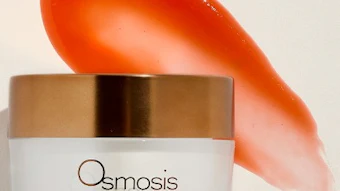
This philosophy is reflected in my product, Dermal Reserve, which was developed to support compromised skin at both the surface and cellular level.
Formulated with hyaluronic acid and 0.25% retinol, it is designed to restore hydration while encouraging controlled cellular renewal:
- Hyaluronic acid improves water retention and supports barrier integrity
- Low-dose retinol (0.25%) promotes cellular turnover and collagen signaling in a measured, tolerable way
In compromised skin, the goal is not aggressive correction, but gradual restoration of function. When introduced appropriately, this combination helps rebuild the skin’s tolerance, improve communication at the cellular level, and support long-term resilience.
Protocol as Strategy
For practitioners, treating compromised skin requires a shift from routine-based treatments to strategic protocol design.
In my practice, this often includes:
- Lymphatic sculpting to reduce inflammation and support circulation
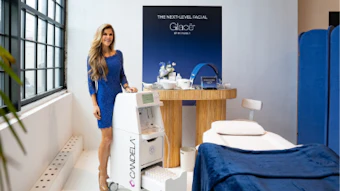
- Hydrodermabrasion for gentle exfoliation and hydration without barrier disruption
- Radiofrequency (RF) introduced selectively to support dermal function
- Cold therapy to calm inflammation and reinforce barrier integrity
Each step is intentional. Stimulation is always followed by restoration.
Male Clients and the Future of Skin Health
Compromised skin is no longer a niche concern. It is increasingly the result of modern skincare practices, environmental stressors, and the disconnect between internal health and external treatment.
As professionals, our responsibility is to evolve accordingly.
This means prioritizing:
- Skin capacity over rapid correction
- Functional health over temporary results
- Education and collaboration over isolated treatment
When we build dermal reserve, align with the body’s internal systems, and approach the skin through a holistic lens, we create outcomes that are not only visible—but sustainable.
And in doing so, we redefine the role of skincare as an integral part of overall health.