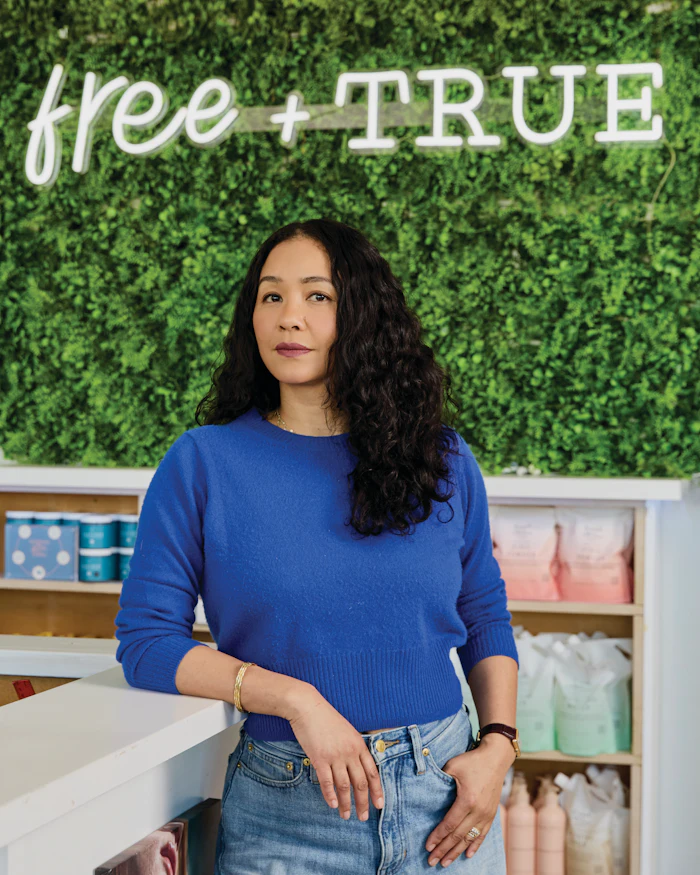
Life’s a journey, and sometimes, the detours we take along the way to our calling, end up being the tools that help us when we find our place in the world.
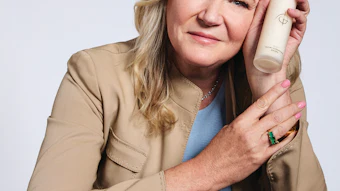
For Tami Blake, a licensed esthetician, spa owner and award-winning beauty entrepreneur behind two brands, Free + True and Sweet & True, this meant transitioning from a career in banking and finance, before pursuing aesthetic school and discovering her affinity for skin care, and eventually, product formulation.
This article is only available to registered users.
Log In to View the Full Article
Life’s a journey, and sometimes, the detours we take along the way to our calling, end up being the tools that help us when we find our place in the world.
For Tami Blake, a licensed esthetician, spa owner and award-winning beauty entrepreneur behind two brands, Free + True and Sweet & True, this meant transitioning from a career in banking and finance, before pursuing aesthetic school and discovering her affinity for skin care, and eventually, product formulation.
In 2013, she opened her own spa, only to discover that many of the waxing products available contained mineral oil or talcum powder, both of which are known carcinogens. Drawing on her background in formulation and herbalism, she strived to create something safe for her team and clients. Then, a trip to the Middle East introduced her to sugaring, and better yet, a basic sugaring paste can be easily and simply made with just sugar, water and lemon.
Her sugaring recipe is actually a family one that she ended up scaling up to be available for professionals—a mighty big leap. Blake describes the process as an educational one. “There’s a lot of research and tweaking when going from the stove to a larger tank, and you know, the mass market. It just took a lot of trial and error. There’s learning manufacturing practices and procuring a space, and learning to do it [create product] in a safe and sanitary way. That was the first thing on my mind when I decided to do this: let’s get the space, and let’s do it right.”
 Drawing on her background in formulation and herbalism, Blake strived to create something safe for her team and clients. Then, a trip to the Middle East introduced her to sugaring, and better yet, a basic sugaring paste can be easily and simply made with just sugar, water and lemon.Melati Citrawireja
Walking the line between professional and consumer markets
Blake’s products started as a professional brand before she launched another line that was direct to consumer. She notes that many brands that have both professional and consumer lines tend to start at the mass market before creating a more specialized line for pros. “Those are two completely different markets,” she comments. “It takes a lot of resources and capital to execute because they’re two different animals.”
As far as the products themselves, backbar products tend to be more potent with their actives, which makes sense; estheticians are specifically trained to work with skin safely. Consumer-focused products don’t pack the same punch, so there’s less of a chance someone will damage their skin at home. These products are meant to sustain skin health and results in between treatments, rather than replace them entirely: a fact that’s important for clients to understand as brands with dual lines are becoming more and more popular.
With a flooded market, there’s also the added weight marketing materials now shoulder, and not always gracefully. As consumers make their demands known, marketing materials strive to distinguish their brands and present them as the perfect match for consumers. Since there’s no regulation on what brands can call themselves natural or clean, market-fatigued buyers are susceptible to making the mistake of purchasing products that might not align with their priorities after all.
For Blake, she prioritizes being transparent about what goes into her products, so that consumers and professionals can both be empowered to decide how good a fit it is for themselves. Her own standards for clean products are reflected in her approach to formulation: staying away from petroleum-derived products, for one, and avoiding known carcinogens like talcum powder, for another.
 Blake, she prioritizes being transparent about what goes into her products, so that consumers and professionals can both be empowered to decide how good a fit it is for themselves.Melati Citrawireja
Navigating what’s on the horizon of the private label aesthetic market
The market is so diversified these days that preferences have expanded past avoiding certain ingredients, and with the wide array of skin needs and consumer values, it can be tricky for brands to decide who their best fit is, audience-wise. Blake’s approach was to go the opposite way, though; in an age where everyone’s tastes are so specific, why not create a universal product to be a staple, safe to be enjoyed and beloved by everyone?
When it comes to the personalized market, Blake notes that often, the way to approach customization is to start with a gentle base and swap out products according to preference and/or condition. Her brands are navigating the age of hyper-customization by hosting products gentle enough to be amenable with sensitive skin types, post-procedure skin and skin with conditions like rosacea. She also makes a point to keep them fragrance-free. In terms of what she advises for others starting their own product lines, she says there’s no universal right answer. “It depends on your business model and bandwidth.”
 “You want to ensure they’re reliable partners, and that they’re doing things on time, and that they’re operating with the same level of integrity you are," says Blake. "People might try to cut corners—you just don’t know where they’ve sourced that chamomile, for example.”Melati Citrawireja
Intention and integrity are what Blake’s modus operandi comes down to, and it’s a reliable guide for others to navigate private label, as well. When it comes to partnering with manufacturers and formulators, it’s important you do your due diligence and really know who you’re working with.
“You want to ensure they’re reliable partners, and that they’re doing things on time, and that they’re operating with the same level of integrity you are," says Blake. "People might try to cut corners—you just don’t know where they’ve sourced that chamomile, for example.”
This has implications for the custom device manufacturing industry as well, with similar considerations being present.
Whatever you’re trying to create custom, Blake reaffirms the importance of credible professionals. “It’s important to bring in expertise, and make sure it’s a credible source, and that everything’s been tested.” She’s optimistic about the personalized device market, as professionals become more comfortable with private label, and it becomes easier to navigate with the myriad of services at the industry’s disposal.