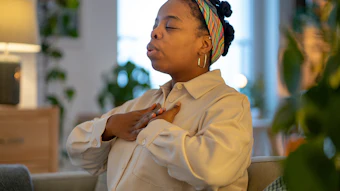
A woman sits in her car outside a spa, hands gripping the steering wheel. She has spent months enduring chemotherapy treatments, endless appointments, and conversations focused on lab results, medications, and side effects.
Today should feel different.
Yet she hesitates.
Will the esthetician understand why her skin suddenly burns from products she once loved?
Will the massage therapist know why lymphatic concerns matter?
Will someone ask the wrong question?
Will she have to explain her cancer all over again?
Or worse, will she be treated as though she is fragile, broken, or defined by her diagnosis?
For millions of people living with cancer, these concerns are real.
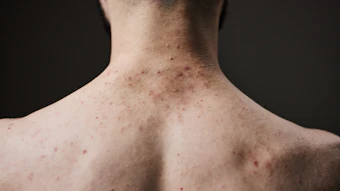
Cancer changes more than the body. It changes how a person experiences the world. Skin becomes reactive. Nails become brittle. Hair may thin or disappear. Energy fluctuates. Confidence can take a devastating hit. The simple act of scheduling a facial, massage, manicure, or salon service can become an exercise in vulnerability.
I Know Because I Have Been on the Other Side
At 18 years old, I heard words no young woman expects to hear: “You have cancer.”
It was 1978. I had uterine cancer, and in what felt like an instant, my life changed.
At an age when I should have been thinking about my future, I suddenly found myself facing doctors, medical procedures, uncertainty, and questions I never imagined I would have to ask.
Cancer became part of my story.
But I could never have known then that decades later, that experience would also help shape my life's work.
I entered the beauty industry in 1982 and eventually became a Master Esthetician. Years later, my professional world and my personal cancer experience collided when I began working with people undergoing cancer treatment.
I saw something that I couldn't unsee.
People living with cancer needed more than medical care.
They needed places where they could simply feel human again.
They needed professionals who understood why their skin had changed, why certain treatments or products might no longer be appropriate, and why modifications weren't merely preferences, but matters of safety.
But they also needed something that couldn't be learned from a textbook.
They needed compassion.
I began to understand that there was an important space between the treatment room and everyday life. A space where the beauty and wellness professional could play a meaningful role.
Not by treating cancer.
Not by promising healing.
But by helping a person feel safe, cared for, understood, and perhaps a little more like themselves again.
That realization changed the direction of my career and ultimately led me to dedicate my work to oncology esthetics and educating other professionals to safely and compassionately serve people affected by cancer.
Compassion Is Only Half of the Equation
Compassion matters deeply.
But compassion, by itself, is not enough.
A kind heart without proper knowledge can unintentionally cause harm. Well-meaning professionals may recommend contraindicated treatments, use inappropriate products, overlook medical considerations, or create anxiety simply because they do not understand what their client is experiencing.
The opposite is also true.
Knowledge without compassion can feel cold and clinical.
True healing-centered care exists where compassion and competency meet.
When a trained professional understands both the emotional and physiological impact of cancer treatment, something remarkable happens.
The experience shifts from a service to a sanctuary.
The client no longer has to educate the professional.
The professional no longer fears making a mistake.
Trust begins to replace uncertainty.
And in that space, a different kind of healing can occur.
Not healing in the sense of curing cancer.
Healing in the sense of restoring dignity.
Healing in the sense of helping someone recognize themselves in the mirror again.
Healing in the sense of feeling normal, even for an hour.
Every Touch Communicates Something
Compassionate human connection can have a profound impact on emotional well-being and quality of life. While these moments may never appear on a medical chart, they matter deeply to someone living through cancer.
Every touch communicates something.
A rushed touch says, “I have another appointment.”
An uncertain touch says, “I'm not sure what to do.”
An educated, compassionate touch says:
“You are safe here.”
That message can be life-changing.
As healthcare increasingly recognizes the importance of caring for the whole person, the beauty, wellness, and spa industries have an extraordinary opportunity.
We can become part of a larger culture of compassion.
But caring for people affected by cancer requires more than good intentions.
It requires education.
It requires awareness.
It requires skill.
And it requires a commitment to seeing the person before the diagnosis.
What If Awareness Is No Longer Enough?
Every October, we talk about cancer awareness.
We wear ribbons. We share stories. We honor survivors. We remember those we have lost. And all of those things matter.
But perhaps it is time to ask another question:
What comes after awareness?
What if our next responsibility is preparedness?
What if every esthetician, cosmetologist, massage therapist, nail professional, spa, salon, and wellness center understood how to safely welcome someone affected by cancer?
Imagine a person undergoing cancer treatment being able to walk into a spa or salon without wondering:
Will they know what to do with me?
Imagine instead seeing a trained professional and knowing:
I'm safe here.
That is the future I want to help create.
Cancer treatment may save a life, but compassionate, informed care can help someone live that life with dignity, confidence, connection, and hope.
I know because more than four decades ago, I was the person with cancer.
Today, I have the privilege of helping educate the professionals who may one day care for her.
So this October, let's do more than raise awareness.
Let's raise our level of care.
Let's replace uncertainty with education.
Let's replace fear with confidence.
Let's pair skilled hands with compassionate hearts.
And let's create a world where no person affected by cancer has to wonder whether there is a safe place for them.
Because perhaps one of the greatest gifts we can give someone living with cancer isn't another treatment, protocol, or product.
It is the assurance:
I see you.
I understand you.
I am prepared to care for you.
And you are safe here.
That is the healing power of being safely seen.