Every culture has an approach to achieving wellness of the mind, body and spirit. Those cultures can inspire wellness practitioners in the spa industry with unique ways to help clients achieve and maintain a healthy lifestyle. Japan’s culture of innovation extends to products, services and locales that evolve to meet local demands, but also provide opportunities to distinguish your brand by broadening your offerings. As you review the following examples (experienced during a summer 2025 excursion to central Japan), consider how you might incorporate elements of J-wellness in your operations to bring culture and innovation to your clients.
Retail Revelations
Our first encounter with Japanese wellness was neither an activity nor a retailer—it was in the lobby of the Hotel Keihan Kyoto Grande. Across from the check-in desk was a toiletries table where guests could choose from a variety of individually wrapped products and tools, such as toothbrushes and cotton swabs. The supply of “body wash towels” was particularly low since in-room towels did not include washcloths. Removed from packaging made from eco-friendly biomass, the stretchable mesh fabric seemed unremarkable, but the addition of water and body wash liquid created large mounds of dense foam not experienced when using terry cloth that's available at home. Use of the towel combined with the in-room body and hand soap left my skin soft and hydrated without the lotions I typically use. I hoped to purchase the products and was surprised to learn that Hotel Keihan’s “bathing liquids” are professional products not available to the public. However, mesh fabric washcloths were readily available for purchase in stores and online.
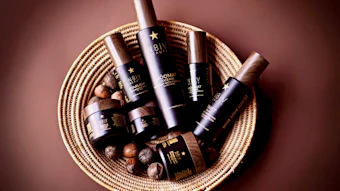
Speaking of stores, the Japanese retail scene has a plethora of options. Within Tokyo, shops adjacent to the Shinagawa Prince Hotel and the Shibuya area offer a range of beauty, health, and wellness products. A shopping center within walking distance of Shinagawa Prince provides two very different perspectives of Japanese wellness. Musee de Peau bills itself as a cosmetic “megastore” with over 10,000 items, including body products, hair products, and fragrances from midrange suppliers to high-end operations like Shiseido. Musee also provides “beauty counselors” available to answer questions, as well as provide skin diagnostics and treatment services. In contrast, steps from Musee, is retailer Ethical & Sea, a smaller store with a distinct focus. Its moniker emphasizes offerings developed via the intersection of three “pillars” – ethical, sustainable, and tech. Their “Power of Africa” promotion exemplifies this approach with products such as Pure Marula Oil from Verde Marula, Ltd, and Moringa Tea from Mago. The suppliers allow Ethical & Sea customers access to unique offerings from Southern Africa and Ghana that incorporate local botanicals.
Service Selections
Beyond the range of cosmetic and wellness products within the Japanese retail landscape, there are services with distinctive techniques intended to enhance health, beauty or both. While acupuncture has become an established offering in many U.S. markets, clinics in Japan offer moxibustion by applying heated dried mugwort (moxa) to acupuncture points using needles or directly on the skin. Practitioners note that applying warmth to such points encourages circulation that can alleviate chronic ailments. Whether moxa is applied to the skin to induce scarring, or removed before scarring, or introduces heat to an area without direct contact, depends on the nature of the complaint. Therefore, formal training from qualified acupuncture schools and experienced professionals is essential to understand methodology protocols and contraindications.
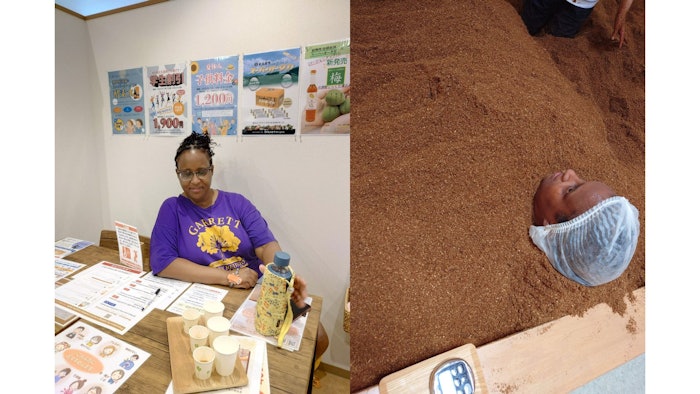
For a less clinical, more spa-adjacent experience, I opted for an enzyme bath at Nagahama City’s Bios Spa. Also known as a sawdust bath treatment, the experience began with an extensive health history questionnaire, followed by the consumption of Super Otaka enzyme drink. Mixed with lukewarm water, drinking the light, aromatic fermented beverage reminded me of teas used in traditional Japanese tea ceremonies. However, the formulation, which combined fruit, vegetables, grains and herbs, was offered before the bath with the intention of supporting metabolic and digestive processes to complement the detoxifying property of the external treatment. A few minutes later, I was led to a changing room to don a disposable two-piece bikini (reminiscent of bouffant caps used in the food industry), followed by a yukata (an unlined, lightweight cotton robe) and a hair cap. Then I entered a treatment room with two rectangular in-ground pools filled with finely ground sawdust and a couple of clients submerged to their necks. Directed by attendants to a hollowed-out space, I climbed in and trudged through the heated bath until I was lying on my back with my head supported on the edge of the pool. Covered in sawdust by attendants, I lay submerged for 10 minutes before sitting up to drink cold water and leave the pool. Sitting at the pool’s edge, attendants brushed off most of the dust before I entered a shower to remove the rest. After a return to the changing room, the last stop on my spa journey was a visit to a secluded lounge area, where I took the opportunity to begin a brief meditation that provided a unique dimension to my detox experience.
Lessons Learned
Japanese products and services exemplify how skin care is one component of a broader emphasis on well-being. They also illustrate how materials and techniques beyond the European diaspora can be valued contributors to those efforts. Adopting these approaches in your business means strategizing whether to diversify product offerings, expand technical competency or renovate treatment facilities to broaden options for existing clients, as well as attract new clientele.