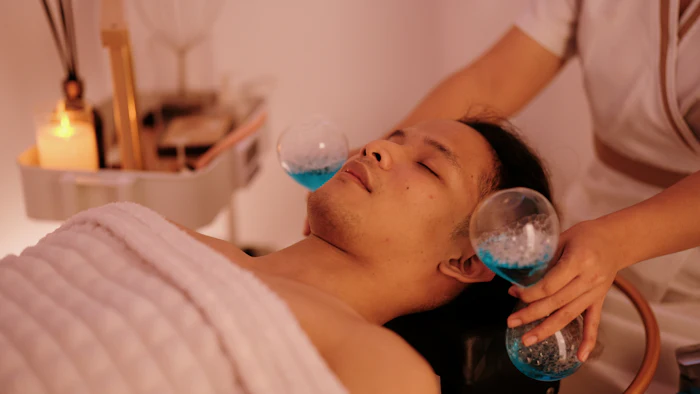
What if a simple, portable sound ritual could deepen client relaxation, improve perceived results, and turn first-time visitors into loyal guests?
I have long been a fan of sound therapy; I remember during my first sound healing experience I felt like I floated into another dimension and the calm and peace I felt was so memorable. And I have heard the same from other people who have had sound therapy as well. I enjoyed the various sounds used during the treatment, from sound bowls, gongs, chimes just to name a few.
Sound therapy has its roots in ancient practices. In ancient Egypt sound was used for healing practices, harps and flutes were used to create harmonious sounds for healing.
Cambridge Sleep Sciences note that Greek philosophers like Pythagoras explored mathematical relationships between sounds, suggesting that sounds can influence emotions, health and well-being.
Native Americans used the flute for sound healing, and you will find sound used for healing throughout every culture. Even lullabies have been used for centuries by almost every mom to get her child to sleep.
Modern science may say that sound therapy still needs more research and the benefits are anecdotal. However, as scientific inquiry into this field continues to expand, it is becoming increasingly clear that sound holds incredible potential for enhancing physical health and emotional well-being.
Sound healing fits naturally into esthetics. There’s a connection between relaxation, skin health and enhanced client experience.
We have long equated a memorable facial spa experience with phenomenal healing touch, massage and relaxing music but adding sound therapy takes it to the next level.
The goal in any spa facial service is for your guests to feel relaxation and achieve their skin goals at the same time. One way to elevate this experience is to consider adding some elements of sound therapy beyond the relaxing music you may have chosen to play during your treatments.
Some of the benefits include stress reduction by helping to realign the body’s natural vibration, and lower cortisol levels and help achieve a more restful sleep. When your guest truly relaxes during the facial it can help product absorption as well. Sensory rituals like sound therapy can leave a lasting impression and enhance the treatment experience and client recall.
In this competitive landscape it is important to think of ways to make your business stand out and to offer unexpected, elevated enhancements to your service. Whether you practice esthetics in your own studio, a spa or in a med spa, there is place for adding sound therapy to make you stand out.
Let’s dive into the many benefits behind sound therapy and how it enhances your guests’ skin treatment results.
There are physiological benefits as I mentioned regarding nervous system balancing and cortisol modulation which are both linked to calming inflammation in the body and skin. Elevated cortisol, the stress hormone, can aggravate acne, may increase skin inflammation, weaken the skin barrier and contribute to accelerating aging. As estheticians we may have topical remedies for these conditions, but adding sound therapy can help achieve quicker results with every treatment as well as improve long term results.
There are additional skin-related benefits; by using specific frequencies of sound, you can help to improve circulation, lymphatic flow and enhanced product absorption through relaxation.
Common modalities of sound therapy to consider for your treatment room would be tuning forks, singing bowls, crystal bowls and chimes.
The good news is that anyone can do sound therapy, there is no special license for this modality although you may want to invest in sound therapy certification so that you can fully understand and implement this modality most effectively.
I asked Michelle Kellogg MEd, RMT Reiki Master & Sound Healer from MindfulMystic.com about how she would advise a licensed esthetician to get certification for using sounds therapy if any?
Michelle said “I encourage estheticians to pursue training through established sound healing or vibrational wellness workshops that provide both hands-on experience and education in client safety, relaxation techniques, and proper instrument use. Even when certification is not legally required, professional training adds credibility and helps practitioners integrate sound into treatments in a skillful, intentional, and therapeutic way.”
I went on to ask from her extensive knowledge in this area how can sound chimes, singing bowls help during a facial treatment?
Michelle shared that “sound chimes and singing bowls can create a deeply calming environment that helps clients relax both physically and mentally during a facial. The soothing tones help quiet the mind, reduce stress, and support nervous system relaxation, which can enhance the overall spa experience. Many clients report feeling more grounded, peaceful, and receptive to self-care when sound is incorporated into their treatment.”
Finally, I asked Michelle what impact has sound therapy has had on her client’s lives?
“Sound therapy has helped many of my clients move from a state of stress and overwhelm into one of deep relaxation and inner calm. In today’s fast-paced world, people rarely give themselves permission to fully slow down, and sound creates an environment where the body and mind can soften, relax, and restore. Clients often leave sessions feeling lighter, calmer, more centered, and more connected to themselves.
Worldmetrics.org sites that 60% of consumers are interested in sound therapy with 68% of U.S adults visiting a spa once a year 52% say their main reason is for stress relief and 71% of Millennials prioritize “wellness experience” over material goods.
There are several ways you can add this into your current offerings. Consider a pre-session grounding, sound therapy while your guest is masking, or as a post session concluding ritual. Session duration can vary from 5-10minutes during any facial service. There are no wrong or right ways to implement this modality into your treatment, it can be as simple as starting or ending your treatment with some sound therapy.
You also will want to consider some safety and inclusivity considerations, some guests with hearing sensitivity, migraines or those with sensory processing differences. This can be remedied by adding a brief explanation of benefits, potential sensitivity and an opt in/opt out option on your intake and consent forms. Another thing to be mindful of is cultural sensitivity, honoring diverse sound traditions and avoiding cultural appropriation, and client autonomy: respect for personal preferences and boundaries.
As skincare professionals we truly hold tremendous power in how we can elevate our guest experience into one that delivers results and gain a loyal following. If you haven’t added sound healing into your practice, I hope this article will pique your interest in how you can begin to take steps to add this extraordinary modality into your guest experience. If you have been offering sound therapy, I know you can testify to its healing power.