I was sitting at my desk in my office when I found out I had cancer, just moments after finishing with clients. The room still carried the familiar calm of the workday — the hum of routine, the tools I had just set down, the small comforts I’d carefully curated over the years. Sunlight filtered through the window, and framed photos of my family and moments from my career sat quietly on my desk, suddenly feeling strange, almost like they belonged to someone else.
Two days earlier, I had undergone a biopsy. A week before that, an ultrasound. Both doctors had gently told me it looked like cancer, but that only test results could confirm it. I was still in denial. I didn’t have a family history. I took good care of myself. There was no way this could be real — it had to be benign.
When the nurse called, her voice was kind and steady. She confirmed it was cancer, reassured me it was very small, caught early and highly treatable. I registered her words intellectually, but emotionally, I went numb. Then, without warning, the tears came — uncontrollable, overwhelming. That was the moment the unknown truly began, and it was one of the hardest parts to face.
Cancer doesn’t arrive gently. It doesn’t ask if you’re ready. It shows up and redraws your life without permission. From that moment on, there was life before cancer, and life after it, and nothing felt the same again.
From that moment on, there was life before cancer, and life after it, and nothing felt the same again.
For more than fifteen years, I’ve built a career in the beauty industry helping others feel safe, seen and cared for. As estheticians, we’re trained to be steady, to hold space, to be the calm presence people seek when the world feels overwhelming. I had spent years creating not just results, but refuge.
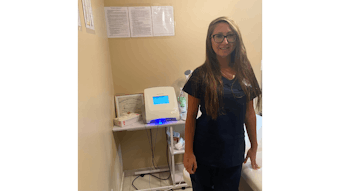
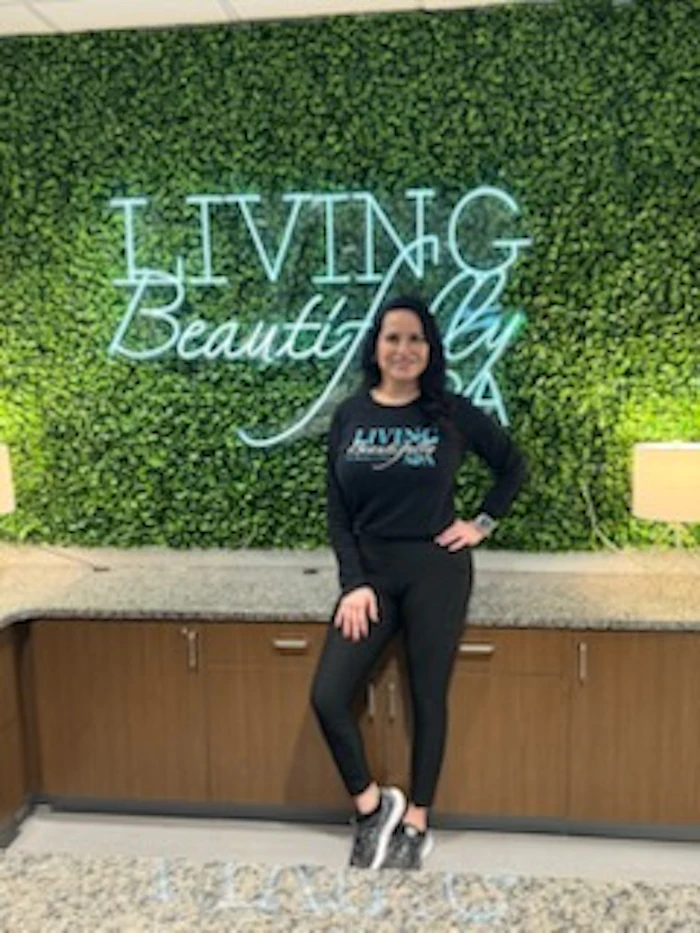
 “Living Beautifully has always been the name of my business," says Johnson, "but cancer gave it a deeper meaning ... Beauty is no longer just something I create for others; it’s something I choose for myself in how I heal, how I lead, and how I show up."courtesy of the author
Yet in that moment, I couldn’t find my breath. My heart raced and my hands trembled. I remember sitting there, trying to reconcile how my body — the same body I trusted to work, to serve, to show up day after day — suddenly felt unfamiliar and fragile.
Fear didn’t slowly creep in; it arrived all at once, followed by anger, disbelief and grief — not only for what might happen, but for the version of myself who had no idea how profoundly her life was about to change.
I didn’t feel brave in that moment. I didn’t feel strong or inspirational. I felt human, stripped of certainty and forced to face the reality that I was now the one who needed care.
I rushed to the bathroom to compose myself before my next client arrived. On the way, I ran into my landlord. He stopped short when he saw my face — the tears, the shock, the rawness in my eyes. I didn’t say anything. I pushed past him, knowing I couldn’t talk. I still had clients to see. So I wiped my tears, took a breath, and did what I had always done: I put on a brave face and kept working.
Surgery and treatment came quickly. I was assigned a full medical team — oncologist, oncology surgeon, radiation oncologist, nurses and a social worker — all in one day. Hours of appointments blurred together. I listened, but so much went in one ear and out the other as my mind raced with questions I couldn’t silence: How is this possible? What did I do wrong? How did this happen?
They reassured me I had done nothing wrong, that this was the most favorable diagnosis possible, that treatment would be straightforward. I felt grateful — deeply grateful, but cancer is still cancer. No version of it feels like good news.
I wasn’t only recovering from surgery; I was grieving the illusion that life is predictable, that strength means pushing through, that tomorrow is promised simply because today exists. Cancer has a way of humbling you quickly, but it also has a way of clarifying what actually matters.
Three days after completing a major move from my longtime home into town — a move that had been planned and set in stone — I underwent surgery. There was no postponing either. My reality became stark and compressed: move my life, then six days later, have surgery to remove cancer. Doctors told me I would likely need only one surgery if there were no complications, followed by radiation, and that I would need six to eight weeks before returning to work.
I had never been away from clients that long. The fear of what this would mean for my business, my income and my identity weighed heavily as I grieved the life I had known before cancer.
Healing slowed my life down in ways I had never allowed before. My calendar emptied, my body demanded rest, and the constant motion that had once defined my days came to a halt. In that quiet, I had no choice but to sit with myself — without productivity, without achievement, without the armor of being busy.
It was uncomfortable and lonely, but it was also deeply honest.
I began to see where I had pushed too hard, ignored my body’s signals, and equated worth with output. I realized how often I had shown up fully for everyone else while quietly abandoning myself in the process. Cancer didn’t just interrupt my life; it exposed the places where something needed to change.
That version of myself is something I had to mourn.
What became clear to me during that time is something our industry doesn’t talk about nearly enough. We teach technique, professionalism, results, and outcomes, but we rarely discuss what happens when your personal life is unraveling and you’re still expected to show up, how to navigate illness without guilt, how to rest without shame, or how to set boundaries when your income depends on your availability.
I used to believe strength meant never slowing down. Now I understand that strength often looks like listening, pausing, asking for help, and choosing yourself without apology.
When I eventually returned to work, it was slow, and intentionally so. About four weeks after surgery, I taught a class that had been booked long before my diagnosis. I didn’t want to cancel, but I quickly realized I was doing the same thing again: forcing myself before I was ready. The anxiety, stress, and panic returned, reminding me that healing doesn’t respond well to pressure.
I backed off again. I saw a few clients here and there. I postponed classes. I made choices that protected my body, even when it meant financial strain. In the silence of not constantly being busy, I finally understood how deeply I had been serving everyone but myself.
Cancer taught me lessons I never wanted but deeply needed. It taught me that rest is not weakness, vulnerability does not erase professionalism, boundaries protect longevity, and community is essential. Most importantly, it taught me that pain does not cancel purpose — it refines it.
I stopped trying to return to who I was before cancer and started becoming who I was meant to be next.
“Living Beautifully” has always been the name of my business, but cancer gave it a deeper meaning. Today, living beautifully means living awake instead of on autopilot, living honestly instead of performatively, and living through hard chapters instead of around them. Beauty is no longer just something I create for others; it’s something I choose for myself in how I heal, how I lead, and how I show up.
This journey has also found its way onto the page. As I moved through diagnosis, treatment, and recovery, I began writing — not with the intention of publishing, but as a way to process the fear, make sense of the loss, and hold onto the clarity this season brought. Over time, those pages became something more.
What began as personal reflection has grown into a book I’m currently finishing — one rooted in resilience, healing, and what it truly means to live beautifully when life doesn’t go according to plan. It isn’t a story about cancer alone, but about identity, purpose, and learning how to remain human and hopeful in the hardest chapters. Writing it has been another form of healing, and another way to reach back and steady someone else who may be walking a similar path.
 "I am still healing, still learning, still becoming, but I know this with certainty: there is purpose in this pain, strength in this struggle, and a meaningful, beautiful life on the other side of fear," says Johnson. "Cancer changed everything, but it did not define me."image courtesy of the author
I’m sharing this story for the same reason. Because I know I’m not the only one. Somewhere, someone reading this is exhausted from being strong, hiding fear behind professionalism, or pushing through when their body is begging them to pause. If that’s you, know this: you don’t have to choose between healing and purpose. You are allowed to rest and still be powerful, to fall apart and still rebuild, to survive this and grow because of it.
Cancer didn’t take my life. It gave me clarity.
I am still healing, still learning, still becoming, but I know this with certainty: there is purpose in this pain, strength in this struggle, and a meaningful, beautiful life on the other side of fear.
Cancer changed everything, but it did not define me.
I am moving forward not as who I was before, but as someone stronger, clearer, and more grounded than ever — committed to living, leading, and loving with intention, honesty, and hope.