Whether your patient presents with acne, melasma, rosacea, post-inflammatory hyperpigmentation, or chronic skin sensitivity, underneath almost every condition you treat is the same fundamental problem: an immune response that has become dysregulated, persistent, or self-perpetuating. The skin is stuck in a state of alarm.
It’s worth noting that inflammation itself isn’t the enemy. Acute inflammation is essential — it clears pathogens, initiates repair, and drives the wound-healing cascade. The problem is when that response never resolves. Chronic, low-grade inflammation isn’t healing; it’s a system that has lost its off switch.
For years, clinicians have been forced to treat the symptoms of that alarm with topicals for the redness, chemical agents for the pigment, and antibiotics for the bacteria. But what if the laser itself could address the underlying inflammatory environment and stabilize the skin at its source?
That’s the clinical promise, and the clinical reality of the Aerolase Neo.
THE ORIGIN: ENGINEERING EQUITY INTO THE LASER
Chronic low-grade skin inflammation is driven by a predictable cascade: vascular dilation, immune cell recruitment, cytokine release, and oxidative stress. This cycle doesn’t just cause visible symptoms — it perpetuates them. Inflamed skin is reactive skin. It resists treatment, flares unpredictably, and rarely holds results.
The key to breaking this cycle lies in the vasculature. Dilated and dysfunctional blood vessels are a primary driver of cutaneous inflammation. They feed the inflammatory response, sustaining the environment in which acne bacteria proliferate, melanocytes over-produce pigment, and the skin barrier continues to break down. Address the vessels selectively and precisely — without triggering a thermal stress response of their own — and you begin to interrupt the cycle at its root. This is where pulse duration changes everything.
THE 650-MICROSECOND TECHNOLOGY DIFFERENCE
The Aerolase Neo operates at a 650-microsecond pulse duration with high energy delivery, a parameter that sets it apart from every other Nd:YAG 1064nm laser in clinical use.
Traditional long-pulse Nd:YAG systems deliver energy over milliseconds, generating heat that spreads beyond the target chromophore and triggers the very inflammatory response you’re trying to resolve. And here lies the irony: those treatment-induced flares aren’t productive inflammation. Unlike the controlled acute inflammation that drives collagen remodeling in ablative resurfacing, rebound inflammation from imprecise energy delivery offers no reparative benefit — only reactivity, downtime, and risk. Patients experience pain, and the post-treatment redness and swelling that make treatment of sensitive, reactive, or darker skin tones particularly challenging.
The Neo’s short pulse duration enables rapid, selective photothermolysis — delivering energy precisely to the target before it can diffuse into the surrounding tissue. The result is a fundamentally different biologic event: targeted vascular disruption without collateral thermal damage, and without the rebound inflammation that limits other laser platforms.
The skin doesn’t just look calmer after treatment. It is calmer at a cellular level.
CLINICAL APPLICATIONS: INFLAMMATION ACROSS INDICATIONS
Because the Neo works at the level of the inflammatory environment itself, its impact extends across an unusually broad range of indications:
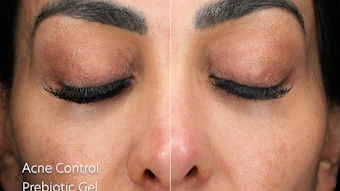
Acne & Active Breakouts: By targeting the sebaceous microvasculature and reducing the blood supply that sustains C. acnes proliferation and excess sebum, the Neo addresses the inflammatory basis of acne, not just the visible lesion. Patients experience a measurable reduction in sebum production, active breakouts, papule formation, and post-inflammatory erythema.
 Active Acne
Rosacea: Persistent facial redness and flushing in rosacea patients is fundamentally a vascular and neuro-inflammatory condition. The Neo’s 1064nm wavelength selectively targets the ectatic vessels driving chronic erythema, while its atraumatic energy delivery avoids the flare-triggering heat of conventional lasers. Proven safe and effective for Fitzpatrick skin types IV–VI who have historically been excluded from effective laser rosacea therapy.
 Rosacea
Melasma & Pigmentary Disorders: Inflammation and UV-induced vascular activity are increasingly recognized as key drivers of melasma. By reducing the vascular stimulus that accelerates melanogenesis, the Neo addresses inflammatory contributors to pigment dysregulation, rather than simply targeting melanin after the fact.
 Melasma
Post-Inflammatory Hyperpigmentation (PIH): For patients whose skin has been through trauma — whether from acne, prior laser treatment, or injury — the Neo’s anti-inflammatory mechanism supports PIH clearance without re-triggering the cascade that caused it. This is a critical distinction: treatments that produce productive acute inflammation for remodeling can inadvertently perpetuate PIH in susceptible skin. The Neo’s atraumatic profile avoids that trade-off entirely.
 PIH
PIH
Sensitive & Reactive Skin: For patients who describe their skin as “difficult” — reactive to nearly every product or procedure, the Neo offers a recalibration. By systematically reducing vascular reactivity and inflammatory burden, it can help stabilize the skin barrier, making it more receptive to other treatments over time.
SAFE ACROSS ALL SKIN TYPES — BY DESIGN
The Neo’s 650-microsecond pulse duration is not simply a performance feature, it’s a safety architecture. Because the energy dissipates before thermal diffusion into the epidermis can occur, the risk of post-inflammatory hyperpigmentation, burns, and adverse events in melanin-rich skin is dramatically reduced. From a clinical standpoint, inflammatory skin conditions disproportionately affect patients with Fitzpatrick Types IV–VI, who have traditionally faced limited safe laser options. The Neo removes effective inflammation-targeted therapy, without traditional compromise.
THE RESULT: STABILIZED SKIN. AMPLIFIED OUTCOMES
When the inflammatory environment is controlled, everything else works better. Patients on topical regimens see enhanced efficacy. Those pursuing combination protocols experience less reactivity and faster recovery. And patients who have been cycling through treatments without durable results finally begin to hold their progress, because the underlying driver of instability is being addressed.
The Aerolase Neo doesn’t just expand your treatment menu. It changes the clinical foundation from which every treatment you perform is launched.
Citations:
1. Hussein RS, Bin Dayel S, Abahussein O, El-Sherbiny AA. Influences on Skin and Intrinsic Aging: Biological,Environmental, and Therapeutic Insights. J Cosmet Dermatol. 2025Feb;24(2):e16688.Geraskova N.N.,Surkichin S.I., Gryazeva N.V., Teplova E.K.
2. Kesty K, Goldberg DJ. 650 usec 1064nm Nd:YAG laser treatment of acne: A double-blind randomized control study. J Cosmet Dermatol. 2020 Sep;19(9):2295-2300.
3. New possibilities of using the combination of laser technologies AEROLASE Nd:YAG 1064 nm MicroPulseand Er:YAG 2940 nm in facial skin rejuvenation Efficient Pharmacotherapy. 2024; 20.
4. Roberts WE, Henry M, Burgess C, Saedi N, Chilukuri S, Campbell-Chambers DA. Laser Treatment of Skin of Color for Medical and Aesthetic Uses With a New 650-Microsecond Nd:YAG 1064nm Laser. J Drugs Dermatol. 2019 Apr 1;18(4):s135-137.