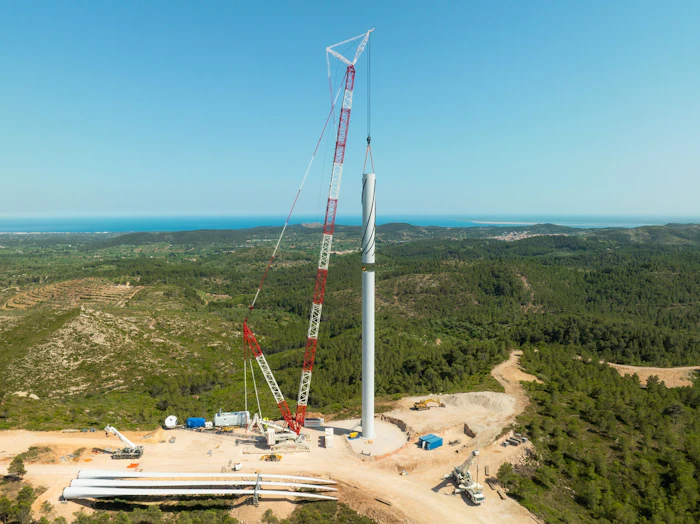
Givaudan has joined a multi-company renewable energy agreement led by PepsiCo, marking another example of how fragrance and ingredient suppliers are increasingly participating in collaborative decarbonization initiatives across global value chains. The 10-year Virtual Power Purchase Agreement (VPPA), signed alongside Smurfit WestRock and Statkraft, is tied to a wind energy asset in Spain that is currently undergoing repowering with higher-efficiency turbines.
The agreement was developed under PepsiCo’s pep+ REnew program, a renewable electricity platform launched in 2022 to help suppliers, manufacturers and bottlers gain access to long-term clean energy procurement opportunities. The European deal represents the second completed VPPA cohort under the program and its first renewable electricity cohort in Europe. Schneider Electric’s consulting division, SE Advisory Services, supported the structure of the transaction by aggregating electricity demand across the participating companies.
For Givaudan, the partnership reflects the growing role of collaborative energy sourcing within corporate sustainability strategies, particularly as ingredient suppliers face mounting pressure from multinational customers to reduce Scope 3 emissions throughout the supply chain. By joining the aggregated purchasing model, Givaudan gained access to renewable electricity arrangements that are often more accessible to larger standalone buyers with greater purchasing scale.
According to the participating companies, the renewable electricity generated through the agreement is expected to contribute to approximately 32,000 metric tons of CO₂ emissions reductions annually. The Spanish wind project will be repowered using more efficient turbine technology while retaining existing grid infrastructure, including substations and interconnection points, an approach intended to accelerate renewable deployment while limiting additional environmental impact.
Willem Mutsaerts, head of global procurement and sustainability at Givaudan, positioned the agreement as part of the company’s broader sustainability and customer collaboration strategy. “By joining forces on renewable electricity in this way, we are translating shared ambitions into tangible climate action,” he said, adding that the initiative aligns with Givaudan’s 2030 strategy and demonstrates how collaboration across the value chain can accelerate decarbonization efforts.
 Willem Mutsaerts, head of global procurement and sustainability at Givaudan, positioned the agreement as part of the company’s broader sustainability and customer collaboration strategy. PepsiCo
The deal also highlights the increasing convergence between consumer goods companies and their ingredient suppliers around energy transition planning. As beauty, flavor and fragrance manufacturers continue to face customer expectations tied to emissions disclosure and science-based climate targets, consortium-style renewable energy agreements are emerging as a mechanism for suppliers to participate in large-scale clean energy procurement while strengthening strategic customer relationships.
For PepsiCo, the agreement supports the company’s updated 2030 climate targets under its PepsiCo Positive (pep+) framework, which includes goals to reduce Scope 3 Energy & Industry emissions by 42% and Scope 3 Forest, Land & Agriculture emissions by 30% using a 2022 baseline. The company said the initiative forms part of its broader Science Based Targets initiative-validated pathway toward achieving net-zero emissions by 2050 or earlier.