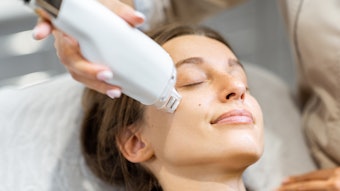
Although light therapy has been used worldwide for more than 40 years, its popularity for cosmetic enhancement only recently has increased exponentially. In fact, it has become so popular so quickly that most skin care professionals aren’t educated on the variety of light-based technologies available, as well as informed about who can use them legally. Lasers, intense pulsed light (IPL) and light-emitting diode (LED) treatments are three current light-based technologies that are used commonly for skin rejuvenation.
A brief review of the physics of light
The visible light spectrum is the most familiar—the wavelengths are from 400 nanometers (nm) to 765 nm, which are seen combined as white light and diffracted as a rainbow. White light is composed of colored light. Daylight and standard light bulbs give off light in this range.
Estheticians already should be familiar with the ultraviolet (UV) portion of the spectrum: 0–400 nm. These are the invisible wavelengths that cause UV damage, such as sunburns and photoaging. UV light also is used by estheticians to kill bacteria on their instruments.
Wavelengths that are less likely to be familiar are in the infrared range: approximately 765–2,000 nm. These also are not visible to the naked eye.
Wavelengths that are used most commonly in skin care range from 400–10,600 nm. That range of the electromagnetic spectrum includes visible, infrared and far infrared. Lasers, IPLs and LEDs all fall within this range. (See The Electromagnetic Spectrum.)
Lasers (Light Amplification by Stimulated Emission of Radiation). Lasers are high-powered devices that feature one coherent wavelength of light. They are capable of providing significant rejuvenative improvements to the skin, from gentle collagen stimulation to deep laser peels that require weeks of healing.
Different laser wavelengths affect different components of the skin. For example, some are well absorbed by oxyhemoglobin and, therefore, work well to clear telangiectasia, rosacea or diffuse redness. This occurs through a controlled wound-inducing process called selective photothermolysis. Laser wavelengths convert to heat in the skin and are absorbed by a target chromophore—in this case, oxyhemoglobin—that cauterizes blood vessels and eliminates visible redness. Target chromophores can be melanin (brown), hemoglobin (red) or even water. When lasers generate high levels of heat, they can destroy or vaporize tissues, such as when clearing telangiectasia or when utilized for a laser peel. Successive millisecond pulses of extremely high power help to protect the surrounding tissue, or the nontarget areas, by providing a controlled amount of “cool-down” time between pulses.
Some lasers allow pulse duration and pulse delay settings to be adjusted manually, while others only permit the fluence to be changed. Lasers can be used to tone and tighten lax skin, reduce hair growth, help clear acne, diminish hyperpigmentation, remove tattoos, and improve the appearance of fine lines and scars.
There is a nationwide effort to mandate that a physician or a state-approved alternative medical professional, such as a nurse practitioner or a physician’s assistant, must be present when laser treatments are performed. Some states require that they be administered by a physician. All operators must be trained properly, as lasers are capable of inflicting significant damage, including burning, scarring and the possibility of retina damage. However, they are safe and very effective when used by trained technicians. Lasers are classified as Class IV medical devices by the U.S. Food and Drug Administration’s (FDA) Center for Devices and Radiological Health (CDRH). Individual states have varying regulations on who may purchase a laser legally. Check with your state regulatory board if you are considering a laser purchase. This contact information can be found on www.SkinInc.com.
Intense pulsed light (IPL). IPL is broad-spectrum light composed of multiple wavelengths. A cutoff filter usually is used to restrict the bandwidth to a certain range when IPL is used. The shorter wavelengths clear lentigines (pigment spots) and telangiectasias; the longer ones rejuvenate and smooth the skin.
IPL uses high-power energy and, as such, also operates by selective photothermolysis. The same benefits, dangers, training, restrictions and mandates that apply to lasers are also applicable to IPL. It is used to improve hyperpigmentation, telangiectasia, rosacea, collagen production, and fine lines and scars, as well as employed to reduce hair growth. IPLs also are classified as Class IV medical devices by the FDA.
Some IPL and laser light is visible. When the wavelength used is in the visible range, it appears as a blinding flash of colored (laser) or white (IPL) light. Anyone who is present in the room when a laser or IPL is operated must wear protective eyewear. Multiple nonablative laser or IPL treatments often can deliver results similar to those achieved with a resurfacing laser peel, but without the downtime associated with medium or deep laser peel procedures. Lasers are effective for some cosmetic procedures, and IPLs are beneficial for others.
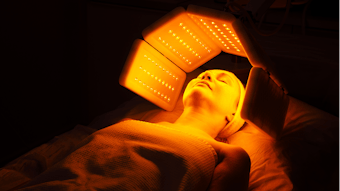
Light-emitting diodes (LED). LED technology normally uses one or more individual wavelengths of light delivered at a low intensity. Whereas laser and IPL deliver light in short (millisecond) pulses at extremely high power, LED is a constant, gentle nonthermal treatment. It is rated as a Class I or II device by the FDA, depending on the model, with only a relatively minor risk of eye injury. For comparison’s sake, bar code readers and laser pointers are Class I and II devices. LED equipment can be sold to and used by anyone, although devices marketed for home use may be less powerful than professional models. LED light is visible as colored light—most often red, blue or amber. When infrared wavelengths also are incorporated, those are not visible. Covering the client’s eyes is recommended, but protective eyewear is not required for the technician.
LED light therapy is a form of phototherapy, and technicians sometimes make a comparison to photosynthesis—the production of organic substances in plants in the presence of sunlight—to help explain its beneficial effects. This may be a good starting point, because the public already understands that plants convert light to cellular energy. This type of light therapy sometimes is referred to as photomodulation, photobiomodulation, low-level laser therapy, low-energy laser therapy or light therapy.
When low-energy laser light passes through the skin, different components of the skin and the cells are affected by various wavelengths, stimulating certain beneficial effects. Red and infrared light therapies have been used therapeutically in Eastern Europe for 40 years, and UV therapy for psoriasis has been utilized in the United States for many years, as has light therapy for treating jaundice in newborns.
Light therapy also has been effective as a remedy for depression; in combination with photosensitive chemicals to treat brain cancer; to heal mouth and skin ulcers for children undergoing chemotherapy; for gum diseases, tendonitis and carpal tunnel syndrome; for muscle and joint pain, and inflammation; in conjunction with acupuncture; to increase wound healing for astronauts on long space missions; for collagen synthesis; to ease rheumatoid arthritis and osteoarthritis; and for blood cleansing and treating infections. These various therapeutic uses are due to the many beneficial tissue and cellular effects of photomodulation.
Photomodulation stimulates fibroblasts to produce collagen, improving elasticity, fine lines, scar tissue and skin thickness. After a series of LED treatments, fibroblasts can continue to produce new collagen for up to
six months and lymph activity is increased, helping to reduce edema, or fluid buildup. Increasing lymph activity also can help to quicken the healing process, because the lymph system is responsible for helping the body to eliminate waste products and bacteria. Macrophages are stimulated by LED light therapy. Within the lymph nodes, macrophages destroy microorganisms—this process is called phagocytosis—so that the lymph system can begin the process of removing them from the body.
Adenosine triphosphate (ATP) production is stimulated by certain light wavelengths. ATP is found in muscle fibers and in all cells, and can be considered the fuel, or energy source, needed for all cellular functions. In order to be used by the cells for energy, ATP is broken down and must be replenished constantly. You think of food as your energy source, but it needs to be converted to ATP before your cells can use it. Increased ATP translates into enhanced cellular metabolism and proliferation. Anabolism (one aspect of metabolism—the synthesis of complex compounds from simpler ones) and catabolism (anabolism’s opposite—the breaking down of large molecules into smaller ones) are both increased. Additionally, RNA and DNA synthesis in cells is increased, improving the reproduction of healthy cells. Photomodulation has been shown to activate the release of growth factors that stimulate cell growth and metabolism.
In all, various studies have reported therapeutic benefits targeting the circulatory, lymphatic, immune and nervous systems, in addition to recent studies reporting on beneficial cosmetic results.
LED equipment currently is being manufactured specifically for cosmetic purposes, similar to lasers and IPL. LED light therapy can be performed without medical supervision and often is delivered through the use of hand-held equipment. This technology is becoming widely available, and can be used safely and confidently in both medical spas and day spas.
References
- C Enwemeka PhD FACSM, Laser Photostimulation: An old mystery metamorphosing into a new millennium marvel. Laser Therapy (12, 13) World Association for Laser Therapy (2004)
- D Fitz-Ritson DC, FCCRS(C), DACRB, Lasers and Their Therapeutic Applications in Chiropractic. J Can Chiropr Assoc 45(1) 26 (2001)
- D McDaniel, MD, Light Tissue Interactions: Photothermolysis vs Photomodulation. PCI Journal 10(3) 15 (2002)
- E J Spear, Light’s Action. Dayspa 221 27 (May 2005)
- G K Reddy, et al, Laser Photostimulation of Collagen Production in Healing Rabbit Achilles Tendons. Lasers Surg Med 22(5) 281 (1998)
- I Neuman, MD, et al, Narrow-band Red Light Phototherapy in Perennial Allergic Rhinitis and Nasal Polyposis. Annals of Allergy, Asthma, & Immunology 78 399 (April 1997)
- J Mercola Light Therapy for Eye Injuries. New Scientist (12 July 2002)
- K Carney, Shedding Light on Beauty. Les Nouvelles Esthetiques, 154 (January 2005)
- LEDs Illuminate the Future of Light-Based Skin Renewal. The American Society of Dermatologic Surgery (10 April 2002)
- L R Horwitz DPM, CWS, et al, Augmentation of Wound Healing Using Monochromatic Infrared Energy. Advances in Wound Care 12(1)35 (Jan/Feb 1999)
- M S El-Genk, The NASA Light-Emitting Diode Medical Program – Progress in Space Flight and Terrestrial Applications. CP504 Space Technology and Applications International Forum (2000)
- New Photo Rejuvenation Treatments Offer a Quick and Easy Solution to Aging Skin. American Academy of Dermatology (5 March 2001)
- P Papageorgiou, et al, Phototherapy with blue (415 nm) and red (660 nm) light in the treatment of acne vulgaris. British Journal of Dermatology 142 973 (2000)
- P Pugliese MD, Fundamentals of Laser Science, Part I. Skin Inc. magazine (July 2004)
- P Pugliese MD, Fundamentals of Laser Science, Part II. Skin Inc. magazine (August 2004)
- P Rogers MRCVS, Laser. From Post Graduate Course in Veterinary AP, Dublin. (1992, updated 1993, 1995)
- R Bryant, Low-level Laser Outshines Other Modalities. Cosmetic Surgery Times Special Report (1 July 2004)
- R Das et. al., Light-Emitting Diode (LED) Irradiation Enhances the Wound Healing Process by Altering Gene Expression Patterns.