Fitzpatrick Skin Type Classification
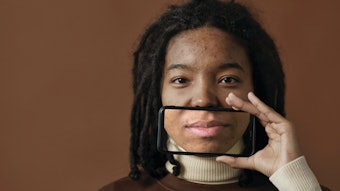
The Fitzpatrick Skin Type Classification system was developed in 1975 by Harvard Medical School dermatologist Thomas Fitzpatrick, MD, PhD. This system classifies complexions and their tolerance of sunlight. It is used by many skin care professionals in order to determine how someone will respond or react to facial treatments. Check your client’s Fitzpatrick classification after defining their photoage and treatment type. See Fitzpatrick Skin Type Classification Scale.
This scale focuses on potentials for irritation—burns—and hyperpigmentation. Both can be good indicators of treatment choices. For example, Fitzpatrick skin type I clients have a greater tendency toward irritation, but less, theoretically, for developing hyperpigmentation, if it is not triggered. Conversely, the Fitzpatrick skin type VI client will not be as easily irritated and will have an inordinately high tendency toward pigmentation. This type hyperpigments very easily.