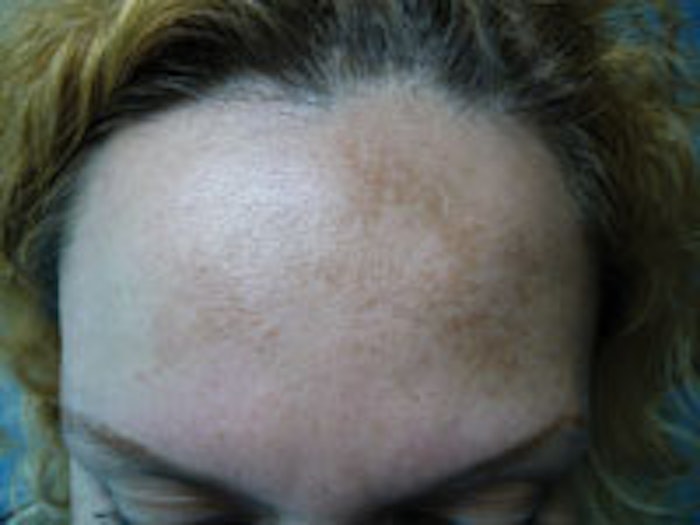
Melasma is a benign skin disorder characterized by irregular patches of pigmentation on sun-exposed areas of the face. The condition is most common in adult females, who comprise approximately 90% of known cases. Although there are many clinical manifestations of melasma, it is generally considered to be a chronic condition with progression of disease if left untreated. Melasma occurs as a result of upregulated melanocytes that produce irregular patches of hyperpigmentation on the skin.
Understanding melasma
Melasma is a chronic condition that primarily affects healthy women of childbearing age. It is believed that a combination of sun exposure, hormones and genetic susceptibility lead to the development of the characteristic blotchy skin associated with melasma. Traditionally, its treatment has been based on four distinctly different, but interrelated modalities:
- Avoidance of UV exposure;
- Topical regulation of melanocytic activity;
- Selective light-based and laser-based photothermolysis of melanocytes or melanin; and
- Chemical or mechanical exfoliation.
1. Avoidance of UV exposure. Minimizing UV exposure begins with the use of sunscreens, and the avoidance of direct and indirect sunlight. Clients should be advised to restrict direct sun exposure during peak hours and apply a physical sunscreen with at least an SPF of 30. By avoiding direct UV exposure, clients avoid unnecessary upregulation of melanocytic activity.
2. Topical regulation of melanocytic activity or melanin production. This is a mainstay of treatment. Common ingredients to help treat melasma include kojic acid, arbutin, hydroquinone and retinoids. The mechanism of action includes enzymatic blockage of melanin production, nonselective inflammatory mediation, tyrosinase-inhibition, stimulation of keratinocyte activity, and mediation of melanosome maturation and transfer. Increasingly, however, clinicians have noted that some active ingredients may not be as dose-dependent as previously thought. Stronger concentrations of active ingredients may lead to higher adverse reactions, with equivalent responses to treatment.
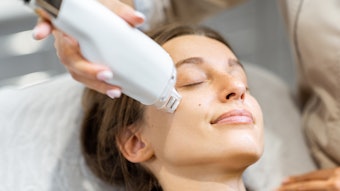
3. Selective photothermolysis. Selective photothermolysis of melanin pigment or melanocytes can be achieved through the use of nonablative lasers and intense pulsed light (IPL). These treatments target either the melanin granules or the upregulated melanocytes. In theory, light-based treatments have the potential to irreversibly inhibit melanin production, thereby causing hypopigmentation; or paradoxically, induce melanin production, thus worsening the degree of hyperpigmentation.
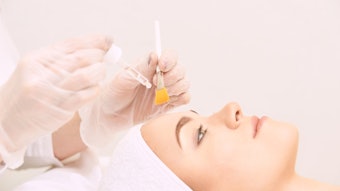
4. Chemical or mechanical exfoliation. This allows for more rapid exfoliation of melanin contained within the skin. The limitations of treatment include the depth of treatment. Clearly, microdermabrasion does not penetrate deep enough to affect deeper melanin deposits, while the efficacy of chemical peels is directly related to concentration and pKa of the medical acid.
Because melasma is a chronic condition with high rates of recurrence, clients who are predisposed to developing melasma may find current treatment modalities needlessly frustrating and difficult. Physicians and skin care professionals can facilitate the treatment process by utilizing the following core principals of melasma management.
Education
Melasma treatment begins with proper education. If clients do not understand the basic reasons for the development of melasma, they cannot possibly sustain a long-term commitment to melasma treatment.
There are three basic reasons why melasma develops in the first place—genetic factors, hormones and UV exposure. Take the time to explain these issues and address why they are relevant to your particular client.
Genetic factors. Melasma has a genetic component that is not well understood. Currently, it is believed that genetic influences make some individuals more susceptible to UV exposure and hormonal influences.1 If clients have a personal or family history of melasma, they are more likely to develop the condition in their adult life. It is imperative that susceptible individuals employ multimodality therapy, as described in the “Understanding melasma” section of this article, and commit themselves to long-term treatment for their condition.
Hormones. Melasma can be influenced by normal, or abnormal, levels of the female hormones estrogen and progesterone.1 Internal hormonal influences include baseline circulatory levels of estrogen or progesterone, pregnancy or abnormal hormone levels caused by endocrine abnormalities. External hormonal influences include fertility drugs, oral contraception or hormone replacement therapy. Foods rich in phytoestrogens, such as soybeans, soy milk and soybean oil, can also influence melasma development. Clients should be aware of these influences, and understand that melasma treatment may be long-term unless these hormonal influences are controlled or abated.
UV exposure. It has been argued that UV exposure is the single most important risk factor for melasma development.2, 3 The current understanding of melasma cannot yet explain why irregular patches of melanocytes are more susceptible to UV exposure than the surrounding normal tissue. UV exposure upregulates melanocytes and increases the basal rate of melanogenesis. This likely leads to the irregular patches of pigmentation that are characteristic of melasma. Because of this, and for many other reasons, exposure to UV rays should be avoided.
Recognize noncompliance
As a skin care professional, your clients commonly seek skin care guidance from you. Although it may often be difficult to discuss noncompliance with your clients, it is in your best interest to do so. They expect results and demand that you deliver core improvements in their skin condition with every visit.
In the case of melasma, there are many areas of noncompliance that must be addressed during every interval examination. Avoiding these issues compromises your ability to produce outstanding results. Although it may be in your short-term interest to avoid the issue of noncompliance with your clients, you risk compromising your results, which may ultimately hurt you in the long run. Remember, clients will refer their friends to you if you deliver results.
In order to increase compliance, every clinical examination should include a discussion of lifestyle and melasma prevention. Discuss the following issues during each visit, and do not be afraid to explain why results may be compromised if clients do not follow recommendations.
Noncompliance with the topical regimen. If you are recommending topical skin care products, you must provide clients with detailed instructions on usage. Often, these instructions should be accompanied by a description of the quantity to be used with each application. In practice, it may be easier to quantify usage with simple tools of measurement. For example, you may ask clients to use a chocolate chip-sized portion or a toothpaste-sized portion of a cream with each application. In addition, always specify frequency of application and duration of treatment.
Another important way to measure compliance with topical products is to have clients bring in their products during each interval examination. That way, you can gauge how much of each product they are using. As an example, if 0.5 grams of Cream A was recommended for twice daily application, a client should be halfway through a 60-gram tube in one month.
In addition, you may find it useful to tell clients how long a product will last if they are taking it as directed. This strategy reinforces the time line approach, described later in this article. Remind clients that the tube of hydroquinone they are using should be applied twice daily and should last approximately two months. If they are only through 10% of the tube at the two-month interval, they are likely not using the product correctly.
Intermittent or chronic UV exposure. Intermittent or chronic UV exposure may exacerbate melasma and may even darken areas that previously responded to treatment. UV exposure can come from tanning booths, direct sun exposure and indirect UV light reflected off water, ice or snow. Although some clients will find it hard to avoid UV exposure altogether because of lifestyle, it is prudent to discuss the ramifications of this behavior on melasma. In addition, clients who absolutely cannot avoid UV exposure may need reinforcement about the proper use of sunscreens.
Provide a time line
Client expectations are not always realistic. In the case of melasma, it should be emphasized that the condition is chronic and progressive, with a high chance of recurrence if left untreated. Although topical creams are the mainstay of therapy for melasma, improvement is generally gradual, and it may take months for clients to notice significant changes in melasma lesions. Clients who are given a time line for treatment generally fare better than those who do not have a global plan of action.
As a skin care professional, imagine yourself in your client’s shoes. Although you as a professional understand that melasma may take months, if not years, to completely clear, clients are often under the false impression that all cosmetic skin treatments can be performed at the speed of light. Because of this, it is often prudent to discuss a time line for treatment, including intervals for follow-up and timing of ancillary procedures, such as lasers, chemical peels and IPL. Clients will appreciate an organized treatment plan and may be less likely to be frustrated when their skin is not completely improved at the one-month point.
An organized time line can provide clients with an honest perspective in regard to what they should expect at the one-month, two-month, six-month and one-year points. It facilitates increased compliance with ancillary-procedure scheduling and empowers clients to seek your expertise at regular intervals. The time line should also address general questions about what a client should expect at these intervals, and provides an outstanding forum to address commonly asked questions about the treatment protocol.
Take photographs
Photography plays an important role in the management of melasma. Clients who begin treatment should first undergo a clinical examination followed by clinical documentation of melasma severity. Photographs provide objective evidence of melasma lesions on the skin and should be taken against a blue background with five basic views.
- Anteroposterior
- Left oblique
- Left lateral
- Right oblique
- Right lateral
Digital copies should be labeled and stored in a secure location. High-resolution printed copies should be made and placed in the clients’ chart for future reference.
Photographs allow for an objective comparison of variable factors, including the degree of suntanning, measuring UV exposure; progressive aging; and the existence of concomitant skin lesions, such as solar lentigenes, scars, age spots, freckles and sun damage. Most importantly, photographs allow for the incremental comparison of melasma lesions objectively.
It is not uncommon for clients to forget what they initially looked like on an interval examination. Photographs allow clients to see their initial presentation and appreciate the interval improvements in melasma severity. This is particularly important among noncompliant clients who are exposed to intermittent periods of UV, despite the skin care professional’s advice against doing so.
Uncompromising quality of care
Melasma treatment can be extremely gratifying for clients and skin care professionals. The goal is to provide uncompromising quality of care, and this can only be achieved by facilitating a client’s ability to treat their condition. Melasma can be improved, but this requires a concerted effort by skin care professionals to educate, teach and support their clients during the entire course of treatment.
REFERENCES
1. VM Sheth and AG Pandya, Melasma, a comprehensive update, J Am Acad Dermatol 65 4 699–714 (Oct 2011)
2. R Hernandez-Barrera, et al, Solar elastosis and presence of mast cells as key features in the pathogenesis of melasma, Clinical and Experimental Dermatology, 33 3 305–308 (May 2008)
3. J Navarrete-Solis, et al, A double-blind, randomized trial of niacinamide 4% versus hydroquinone 4% in the treatment of melasma, Dermatol Res Pract, Epub (2011)
Raffy Karamanoukian, MD, is a board-certified plastic surgeon and skin expert practicing in Beverly Hills and Santa Monica, California. In addition to providing comprehensive cosmetic plastic surgery services, he is a published author and has recently co-authored an authoritative book on melasma. He is a noted researcher and clinical instructor, and has developed a comprehensive protocol for melasma known as the Melaquin Skin Brightening Complex line of products. He can be contacted at 310-998-5533 or via e-mail at [email protected].
Hratch Karamanoukian, MD, is a triple board-certified cosmetic and vein surgeon practicing in Williamsville, New York. He has authored more than 150 peer-reviewed publications and more than a dozen textbooks in medicine. In practice, he leads a national center of excellence for vein disorders in New York. He is also co-author of an authoritative book on melasma with Raffy Karamanoukian, MD. His most recent contribution has been the introduction of Uberceuticals, an innovative nutraceutical company focusing on varicose veins and skin, and can be contacted at 716-839-3638 or via e-mail at [email protected].