Today’s women demand more from their skin care products—and makeup—than ever before. In particular, the anti-aging boom of the past decade has brought skin function into sharp focus for discerning consumers.
Makeup and skin care products now are seen by many in a long-term context, as part of a lifelong strategy to prevent and minimize damage and wear to the skin. And thus, women have grown increasingly wary of cosmetic ingredients, including the preservatives commonly used to keep the products fresh, free of spoilage and perfectly blended for product consistency.
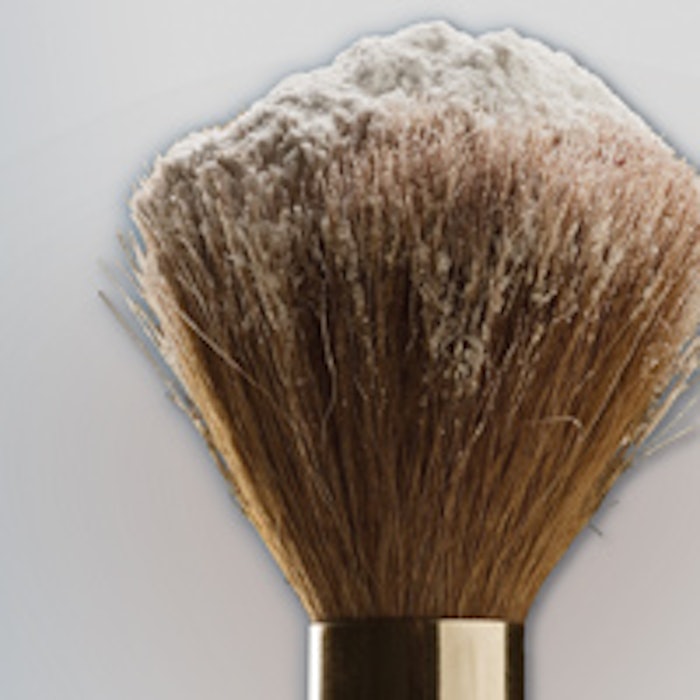
As part of this quest for makeup that supports skin health while still offering coverage, color and textural features, mineral makeup, especially in its dry powder form, has become the darling of many eco-advocates. (See Natural vs. Chemical.) Mineral makeup is typically more sheer and subtle than its nonmineral counterparts, giving the skin a glowing finish with translucent titanium and zinc oxide that also provide broad-spectrum sun protection. Although some of the popularity of minerals is based upon scientific accuracy, other aspects are founded upon myth and misinformation that can, in fact, be dangerous to skin health, and may also lead to consumer dissatisfaction.
Key among these misguided beliefs is the idea that mineral makeup requires no preservative component. Many consumers seek out preservative-free mineral makeup, but this choice not only diminishes the shelf life and therefore the dollar value of the product, but also poses health risks to clients.
The myth of clean skin
“Cleanliness” is a relative and subjective term. Dermatologists and skin care product manufacturers, among others, realize this, but consumers may not. This, in turn, leads to misunderstanding. The human body, and in particular human skin, is a teeming microbial zoo. It is estimated that microbes on and in the body outnumber human cells ten-to-one.1 Many researchers consider human skin, the body’s largest organ, the final frontier of unexplored science, much as the ocean depths or the reaches of space were once viewed. Experts currently recognize at least 182 species of bacteria—fondly called “normal flora” by bacteriologists—as common residents of human skin. In fact, recent research revealed that 19 species alone live in the warm, shadowy areas behind the ears.2
Unless the skin is being disinfected for surgery, cleansing with conventional products, including over-the-counter antibacterial soaps, basically lightens the bioload, but does not fully eradicate all bacteria. Luckily, few of these visitors are lethal. The normal, healthy body tolerates the presence of most bacteria, presuming that the immune system is robust. In fact, the good bacteria present actually defend the skin against pathogen invaders.
Skin is always in a state of bacterial activity, even in the most sterile of settings. The bacteria recolonize as soon as they are disturbed by cleansing, arriving from the air, from everything that is touched and from within the human body itself.
Four established groups of bacteria live on human skin: propionibacteria, corynebacteria, staphylococcus and streptococcus. Those last two groups should give you pause. Staphylococcus aureus and streptococcus mutans, pneumoniae and pyogenes are pathogens. Staphylococcus aureus is the leading cause of bacterial disease in humans, while streptococcus pneumoniae causes 95% of all bacterial pneumonia.
Other commonly found pathogens on the skin include Escherichia coli—E. coli—and Enterococcus faecalis, a component of human intestinal flora used by many European countries as a standard indicator of pollution by sewage, much the way E.coli counts are taken in U.S. waters to determine their safety for drinking and swimming. Human skin typically also swarms with Pseudomonas aeruginosa, Candida albicans, Aspergillus niger, Neisseria meningitidis, Haemophilus influenzae and several forms of Clostridium, all potentially aggressive microbes that are normally kept in check by healthy immunosuppression. Molds, fungi and yeasts are also present, to a smaller degree.
But do you really want to grow your own colonies of these bacteria in your makeup bag?
Mineral promise, paraben parable
It is important to understand that, because the skin is a thriving community of microbes, everything that touches it becomes their transport system. A makeup brush or applicator scoops up innumerable microorganisms with even one pass over cleansed skin. Unless the applicator or brush is discarded or disinfected each time it touches the skin—realizing that a woman typically passes the brush or sponge over the skin several times per application of bronzer, base, eye shadow and blush—entire colonies are introduced back into the pan or jar of cosmetic product each day. They proliferate exponentially, awaiting the arrival of new colleagues with the next product use.
Bacteria thrive in moisture, and this has been part of the appeal of mineral makeup: they are dry powders. It stands to reason that because mineral makeup contains no water in the formulations, no preservatives are needed to prevent the microbial proliferation that is ubiquitous. But here’s where it gets sticky—literally. Even if manufacturers ship promptly and even if the product moves briskly in the retail environment, clients are notorious for hanging on to their favorite cosmetic products long after the manufacturer’s suggested expiration date.
Also consider that makeup is often stored in steamy, warm, damp places, such as the bathroom, and the surfaces and even the air of the bathroom is often laden with an abundance of intestinal flora. These persistently find their way into any product used there.
These microbial concentrations often cause mild infections and irritations. For instance, conjunctivitis is commonly caused by one of the Staph family, which is one of the largest groups of bacteria composing normal flora. Consumers may presume that ingredients listed on a cosmetic package are causing an allergic or inflammatory response in their skin, when in fact they may be reacting to the bacterial omnipresence.
Preservative alternatives
Given this knowledge, the case for preservatives—even in mineral makeup—is irrefutable. So the question becomes, what makes a great preservative? Parabens were the answer until recently. Parabens are a food-grade preservative derived from benzoic acid that operate as a broad-spectrum antimicrobial. Although links between parabens and disease are not conclusive, recent controversy and media concern has turned a large portion of public opinion against this once-common solution. (Editor’s note: See “The Truth About Parabens” by Carol and Robert Trow, which appeared in Skin Inc. magazine’s July 2010 issue.)
Because of this, manufacturers are faced with the challenge of finding a replacement system that is not only effective, but is also nonirritating, nonsensitizing, nontoxic and nonmutagenic, meaning that the preservative does not disturb the DNA configuration. The fact of the matter is that some manufacturers explicitly state that their products are preservative-free in order to court the preference of green consumers, when, in fact, for safety, the products are filled with preservatives. Misleading the consumer is illegal, and certainly never ethically correct, but the conundrum here is clear. Many alternative preservatives are too narrow in spectrum to be practical. Most vitamins and essential oils are not versatile or strong enough on their own to work as effective preservatives.
The new trends in preservative formulation focus upon phenoxyethanol blends, which enhance their effectiveness with preservative boosters such as caprylyl glycol, hexylene glycol and ethylhexylglycerin. The spa industry continues to discover new solutions in the garden, with botanical-based compounds meeting the needs of consumers seeking safe, effective, gentle and truly natural products. For instance, a blend of honeysuckle and jojoba from BioNatural called Plantservative is now proven to prevent microbial action in mineral cosmetics.
Educating and re-educating clients about the need for preservatives in mineral makeup is part of the continuing quest to develop products that meet the diverse array of client demands, because only products that are manufactured with health and safety in mind are truly beautiful.
REFERENCES
1. www.independent.co.uk/news/science/human-skin-is-a-zoo-of-bacteria-scientists-say-435234.html
2. www.nih.gov/news/health/may2009/nhgri-28.htm
(Both accessed Oct 15, 2010)
Sam Dhatt is an award-winning cosmeceutical chemist who serves as the CEO and president of Hayward, California-based DermaQuest Skin Therapy and Allure Labs. During his more-than-20-year career as a sought-after formulator, he has developed and manufactured skin care products for more than 700 companies, including many of the best-known brands in the industry. Dhatt is a frequent author featured in many trade journals and skin care publications, and speaks on ingredients and formulation with the goal of increasing esthetician knowledge and success.